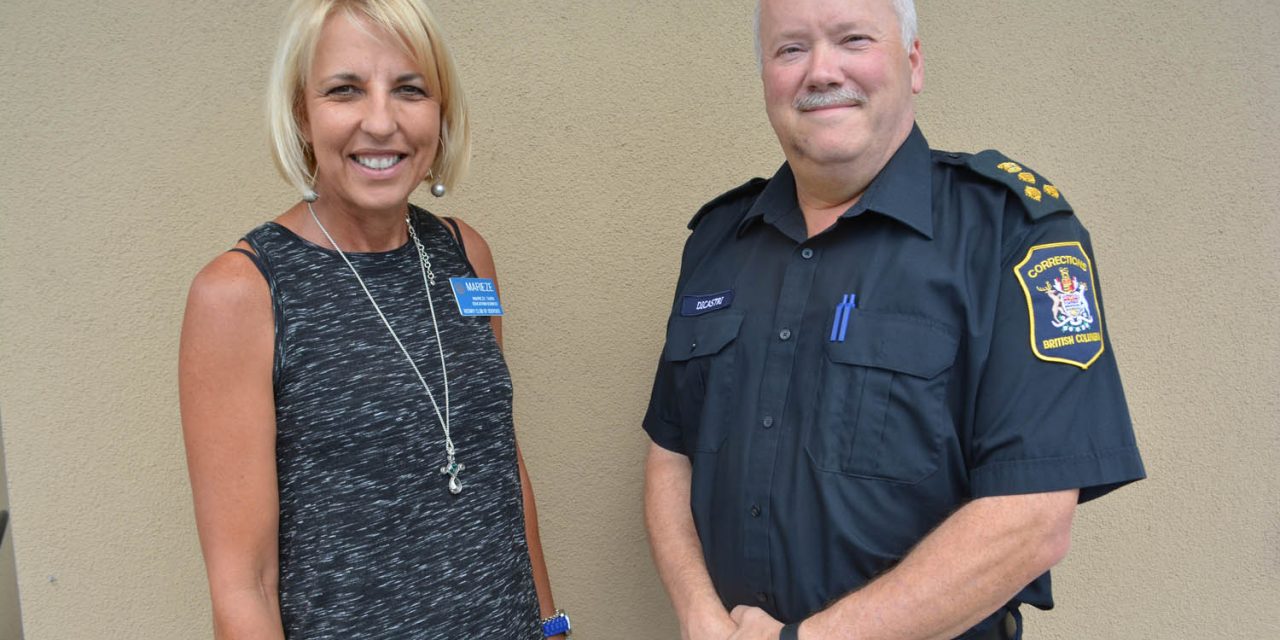
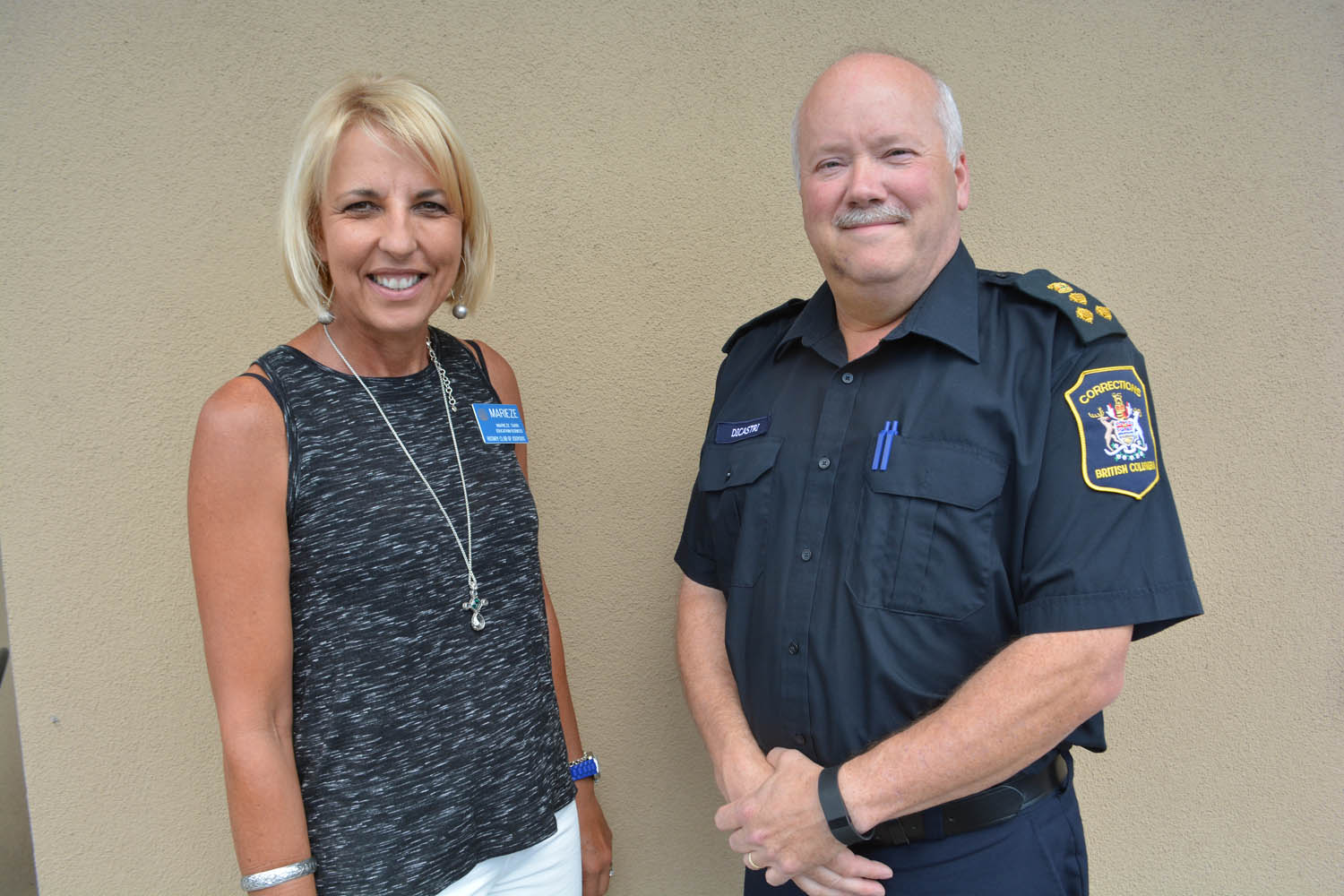
Steve DiCastri, the new warden with the Okanagan Correctional Centre that is scheduled to open near Oliver next fall, was the special guest speaker at the Osoyoos Rotary Club’s weekly luncheon meeting last Thursday in Osoyoos. DiCastri will be in charge of managing the 378-cell prison. He is shown with Rotary Club president Marieze Tarr. (Lyonel Doherty photo)
In the classic 1967 prison movie Cool Hand Luke, warden Strother Martin accused a facetious prisoner (Paul Newman) of possessing a “failure to communicate.”
Members of the Osoyoos Rotary Club could not pin the same accusation on Steve DiCastri, warden of the new Okanagan Correctional Centre (OCC), during a presentation last week.
DiCastri was up front with Rotarians during a luncheon at The Best Western where he was guest speaker.
With 30 years experience under his belt, he outlined what people can expect when the Ministry of Justice takes possession of the prison in October of 2016.
DiCastri noted they have already hired three deputy wardens, who will be backed by dozens of assistants and correctional supervisors.
They will oversee the 378-cell maximum-security facility that boasts approximately 1,200 cameras.
The warden explained the centre would accommodate inmates serving provincial sentences (two years less a day) and those on remand (waiting for hearings or trials).
DiCastri said the OCC will have a 20-cell female component, but he doesn’t suspect many women will be housed there.
BC Corrections’ inmates are offered work programs in various skilled trades, building maintenance and food or laundry services.
The warden said inmates would learn such skills as welding and sewing.
In addition to educational opportunities – some through School District 53 – inmates will be exposed to rehabilitative and behavioural programs, including substance abuse and violence prevention, he said.
DiCastri mentioned that appropriately classified inmates could participate in supervised community work programs.
Inmates are subject to a comprehensive risk assessment prior to being assigned to these programs, and only low-risk, open custody inmates can take part.
This partnership with the community can involve activities such as roadside clearing, park enhancement, firewood production, supporting fire suppression teams, and other work that non-profit organizations might request, he said.
DiCastri said these crews will be working from Osoyoos to Penticton and stressed the inmates will pose no risk to the community.
In terms of rehabilitation, the warden said inmates might have the opportunity for therapy by working with rescued horses on the site.
He pointed out prisoners would also work in a community greenhouse where they will grow fresh produce. He noted this venture would not compete with local fruit stands because the produce will be donated to local food banks.
DiCastri said they want to give inmates the tools and skills they will need when they get out of prison.
When released, they will be given a bus ticket back to their place of origin, the warden stated.
In speaking about correctional officers, DiCastri said females have come a long way in this role since he first started, noting the ratio of females to males is much higher these days.
“They do much better interacting … they communicate much better with the inmates.”
The warden was asked about the dangers of this type of work and acknowledged that assaults do occur on staff. But he pointed out that staff is trained very well to diffuse situations.
Dealing with mental health issues among inmates is another serious challenge that is addressed during rigorous training, he said.
DiCastri was also asked about trends in crime. While no expert, he said overall crime was down 20 per cent last year across the province. He also noted that the number of inmates was also down.
The warden said the most prolific crime is property offences (break-ins and thefts), followed by assaults.
When asked how the OCC will have an impact on local RCMP resources, DiCastri declined to comment, noting this topic is being addressed.
One Rotarian asked if prisoners would get priority treatment at the local hospital.
DiCastri replied that would not take place. Inmates would have to wait in line and there’s no scenario where a doctor would not fast track their treatment.
The warden said he envisions many of the prison staff would be living in Oliver and Osoyoos. He noted that some may choose Penticton, but he sees most taking up residence here.
DiCastri is currently living in Oliver.
The warden was asked to outline the biggest change he has seen in his career. He noted it is the approach to the programs they offer.
Although the ministry had programs many years ago, it was on a much smaller scale.
“Our programs now are delivered consistently, province-wide, and are deliberately designed to enhance public safety by providing real skills and opportunities for the inmates to learn so they have much better prospects for employment when they are released.”
DiCastri said the programs they offer have a real effect on safety within communities and help the corrections department reduce a person’s risk of reoffending.
LYONEL DOHERTY
Special to the Times