
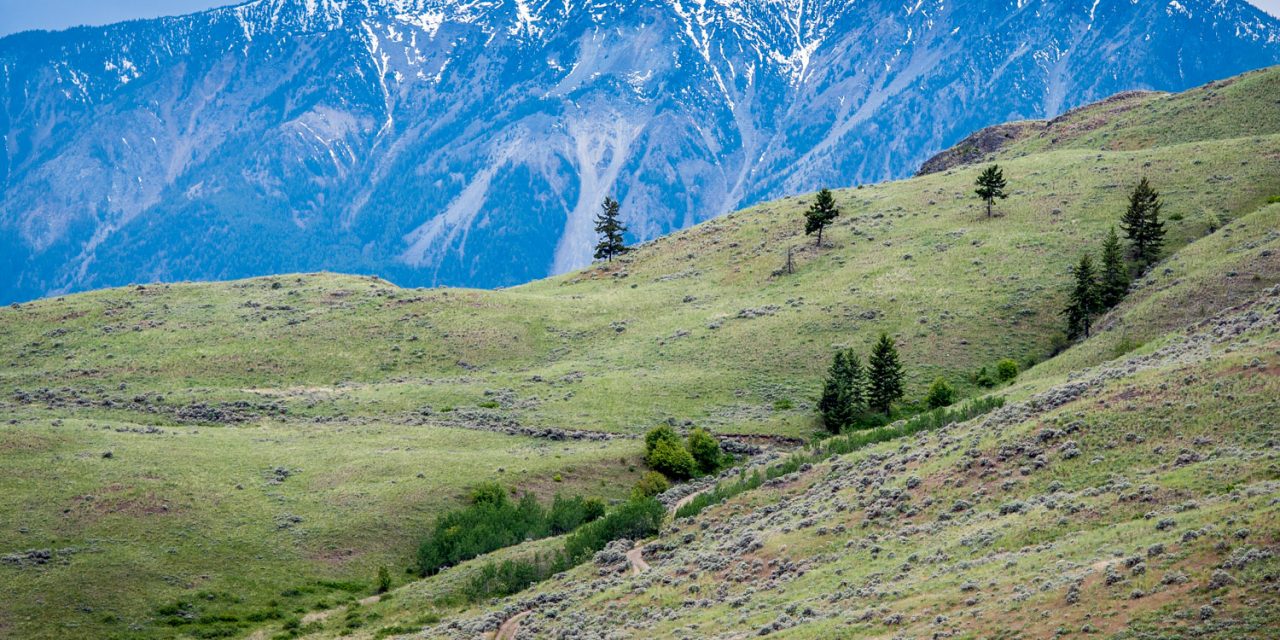
One of the impediments to establishing a national park reserve in the South Okanagan-Lower Similkameen (SOLS) has been the concern raised by ranchers.
Currently several thousand head of cattle graze in the area that was proposed for the park and not surprisingly ranchers were concerned that the park might disrupt this economic activity.
Some have tried to suggest that ranching and a park are mutually exclusive as when MLA Linda Larson told municipal and chamber of commerce representatives late in 2013 that she would rather have one rancher than four tourists.
A federal document recently released through access to information laws makes it clear that ranching and a park need not be mutually exclusive. Indeed, Parks Canada was working on finding a solution acceptable to ranchers at the time the province abruptly pulled out of talks.
Most national parks do not allow grazing. The one exception is Grasslands National Park in Saskatchewan, which makes special allowance for cattle grazing.
As Mark Quaedvlieg, a key rancher in the proposed park area, points out, ranchers in Saskatchewan can’t count on being able to continue grazing in that park. Quite like, he said, at some point Parks Canada will decide that only bison can graze there.
The exception granted in Grasslands is subject to the park superintendent and is renewed annually – certainly not an arrangement that ranchers can take to the bank, Quaedvlieg points out.
He would need to see legal guarantees that ranching could continue in SOLS, which would include an amendment to the Canada National Parks Act.
The recently obtained document shows that Parks Canada was prepared to do exactly that – to amend the federal law on national parks to “incorporate by reference” the current provincial grazing laws and regulations.
This means that ranchers in the park would be able to continue ranching under the exact same rules that the province currently applies.
Not only would ranchers be under the provincial laws they are familiar with, but they would have reassurance they can continue their activities in the national park.
As the feasibility study completed early in 2011 makes clear, Parks Canada was prepared to buy a large ranch in the park area on a willing-buyer, willing-seller basis and then redistribute grazing rights for the remaining ranchers to reduce environmental impacts.
But the key point is that ranchers would have been able to continue ranching and because the land would be grazed less intensively, their cattle might even be fatter.
None of the details were ever released to ranchers in written form, so it is understandable that they were distrustful.
Parks Canada was unable to engage in direct negotiations with ranchers until the province signed off on the feasibility study.
When the province pulled out, all possibility that a national park and ranching could co-exist ended.
The issue is resolvable as the document shows. But only when the province returns to the table can we know if agreement can be reached.

