Canada’s largest bank is funding a local public awareness program this summer about the threat posed by aquatic invasive species such as zebra and quagga mussels.
The Regional District of Okanagan-Similkameen (RDOS) received a $100,000 grant for the program from the Royal Bank of Canada’s (RBC) Blue Water Project.
Local RBC branch managers presented the cheque last Thursday to Mark Pendergraft, RDOS chair, at the regional district’s office.
They were joined by Anna Warwick Sears, executive director of the Okanagan Basin Water Board (OBWB); Lisa Scott, program manager of the Okanagan and Similkameen Invasive Species Society; Sgt. Jim Beck, field supervisor with the B.C. Conservation Officer Service and other RDOS representatives.
Although the RDOS has received funding from the RBC Blue Water Project in the past, this is the first time the regional district has received this funding for invasive species prevention, said Candace Pilling, engineering technologist with the RDOS.
The money, she said, will be used to fund a mobile education outreach unit that will educate the public. It will complement the province’s mobile decontamination units, but it will operate separately and will not do decontamination.
“It will roam all around the Okanagan Valley and the Similkameen and it will attend high-profile events,” she said. “It will also visit some beaches and boat launches and clubs and schools – basically targeted sites.”
The unit will educate people how to clean, drain and dry their boats or equipment such as waders to prevent the spread of invasive mussels, she said. Other money will go towards promotional materials that can be handed out, as well as towards lake and water monitoring.
Zebra and quagga mussels are usually spread by recreational boaters who fail to properly decontaminate their boats after using them in infested waters. Zebra mussels have spread from eastern North America as far west as Lake Winnipeg in Manitoba and quagga mussels have reached waterways in the Southwest United States.
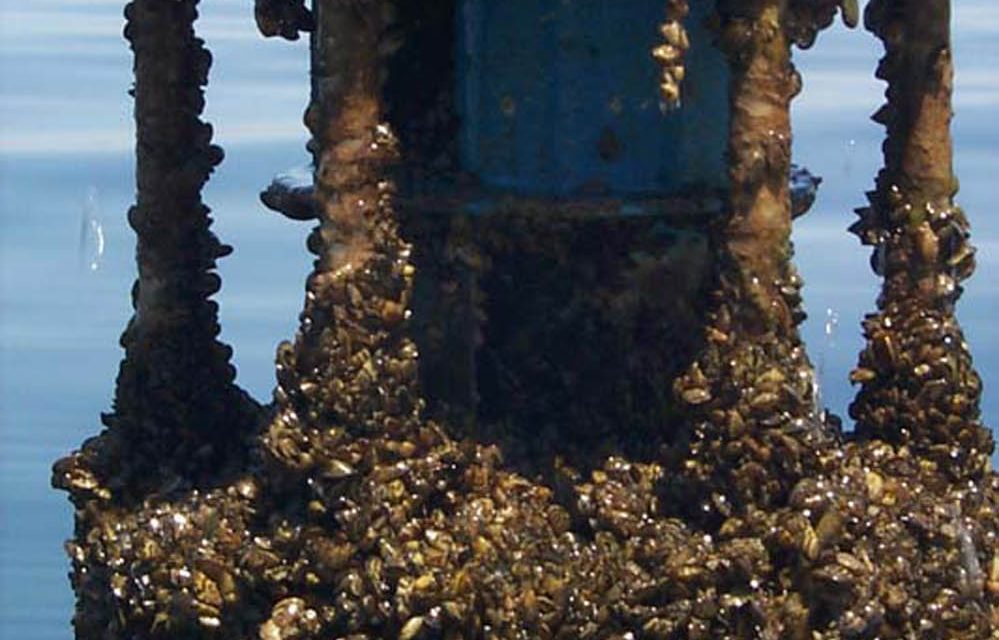
Once established, the mussels spread quickly to cover every solid object in waterways as well as coating river and lake bottoms. They are almost impossible to eradicate.
“As these mussels reproduce, they degrade aquatic ecosystems to the point of collapse,” the RDOS said in a news release. “They cover infrastructure, hampering a water purveyor’s ability to supply water to residents; infest beaches affecting tourism and community enjoyment; and cause a timely and costly imposition to boaters and recreational users by coating boats, propellers and they foul bilges with layers of mussels and their carcasses.”
Pilling said the dates for the program have not yet been finalized, but it is expected to operate through the summer from around the end of June until the Labour Day weekend.
On June 4, RBC Blue Water Day, there will be information at RBC branches throughout the Okanagan, Pilling said.
Pilling points to a recently released short video about the impact that mussels would have on the Okanagan at: https://vimeo.com/125057151.
The RBC Blue Water Project was launched in 2007 with the goal of supporting watershed protection and access to clean drinking water.
RICHARD McGUIRE
Osoyoos Times