
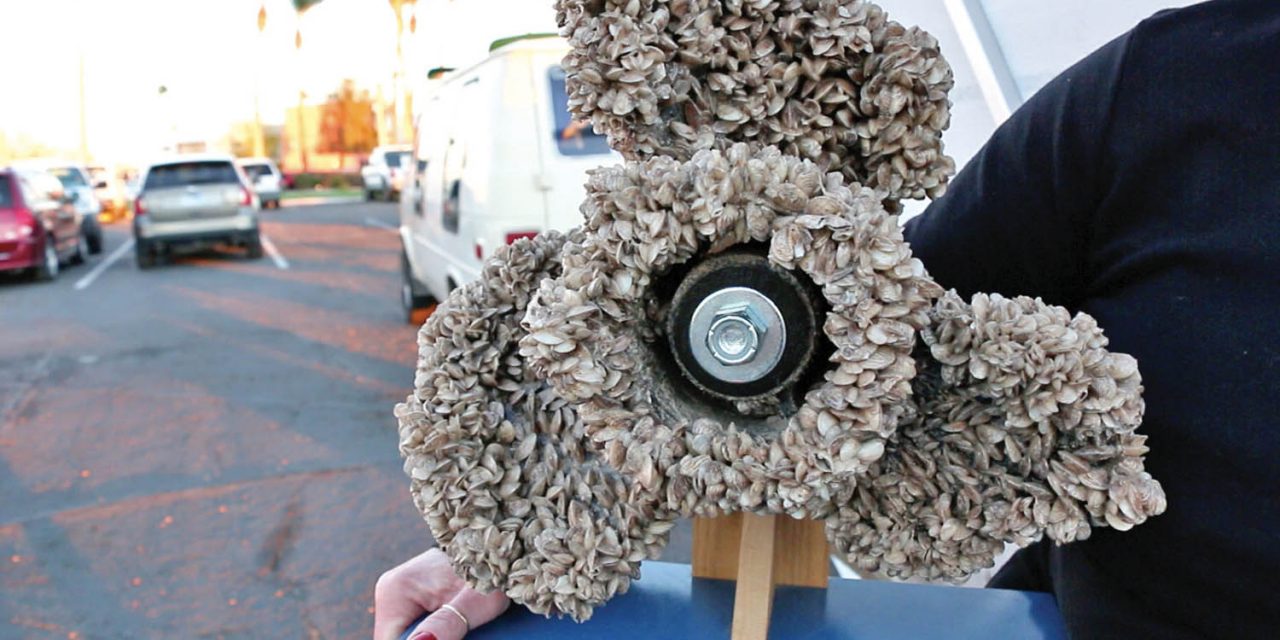
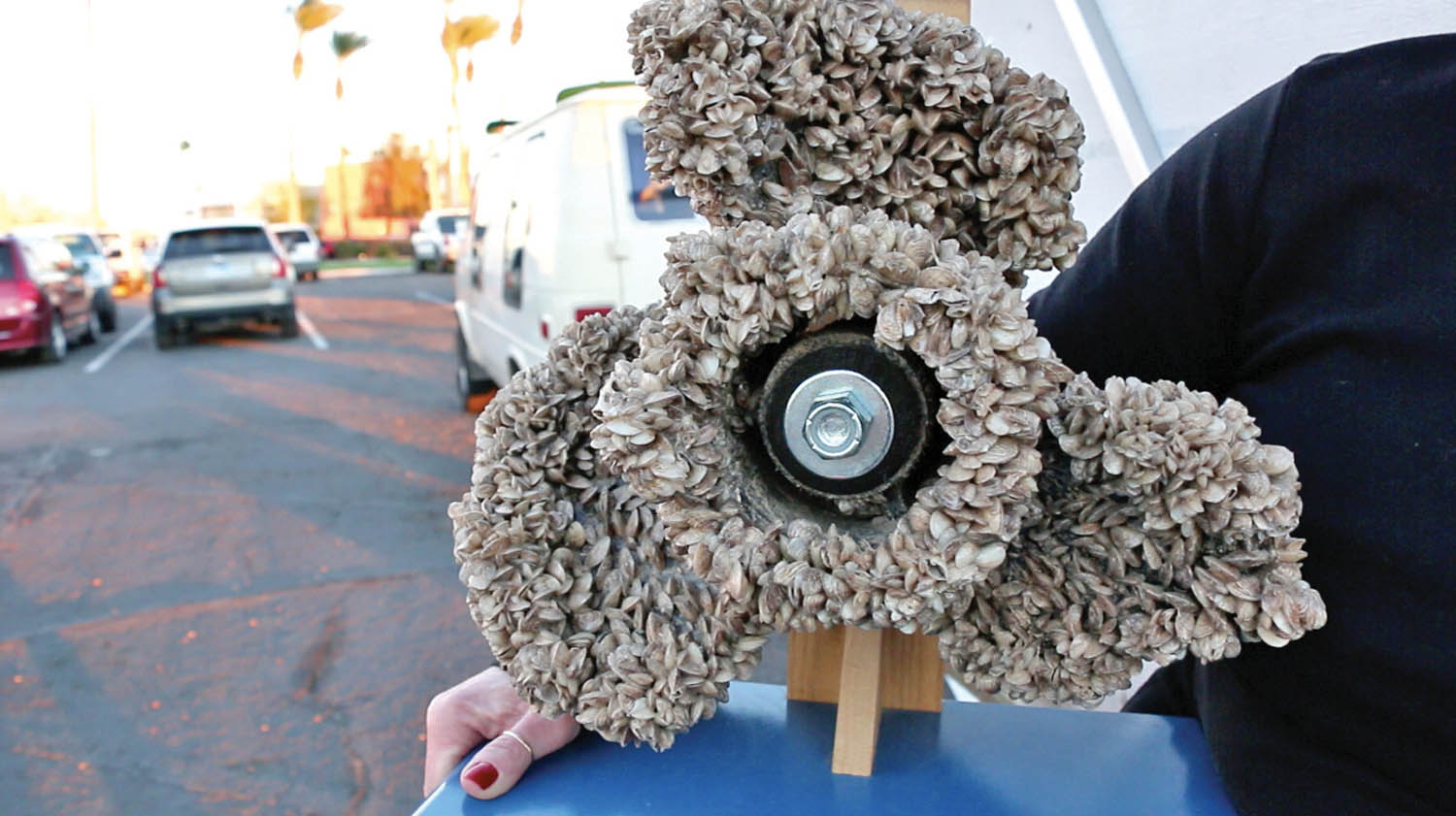
Invasive mussels cover a boat propeller. (Photo supplied)
Last week we ran a story about a young filmmaker who used a crowdfunding website to raise the money to produce a six-minute film called Mussel Threat.
The film is a must see. You can view it free online at: http://vimeo.com/protectourfreshwater.
It is hard to convey in words the destruction caused to North American lakes and rivers by zebra and quagga mussels. They breed prolifically and cover every solid surface in the water, literally destroying lakes and infrastructure.
You need to see it with your own eyes.
Brynne Morrice’s film shows some of this destruction at places like Lake Mead in Arizona and on the Great Lakes.
The Okanagan Basin Water Board (OBWB) has long been sounding the alarm about the economic and environmental damage these mussels would cause if they got into the Okanagan lakes.
It would cost $43 million a year just to mitigate the damage – and that doesn’t take into account a lost tourist industry and quality of life if the beaches of Osoyoos Lake were covered with razor-sharp mussel shells or if resulting blue-green algae made our water unsafe to swim in.
Mussels have been spread by recreational boaters failing to decontaminate their boats after using them in infected waters. At the larva stage, mussels can hitch a ride on a towed boat and be invisible to the naked eye. All it takes is one infected boat.
Until the end of last month, the silence on this issue from the provincial government was deafening. Finally, the province announced on March 31 that it is committing $1.3 million to fund three roving decontamination stations to cover all of British Columbia and do some educational outreach.
Missing from their press release was the fact that this money is spread over three years and is back-ended, meaning there will be very little money allocated for this summer’s boating season.
Also missing is any plan for boat inspection stations on highways leading into B.C. – something the OBWB has been calling for and other jurisdictions have implemented.
Idaho in particular has been a leader in this regard, with inspection stations on all highway entry points into the state. Idaho also has a mandatory sticker program for boaters, which raises revenue for its program and educates the public at the same time.
As Morrice points out, the B.C. government’s strategy with just three roving inspection stations isn’t a strategy at all – it’s just hoping to get lucky. The provincial government talks about a perimeter strategy in which B.C. works with other provinces and states to intercept boats coming from infected jurisdictions to neighbouring uninfected ones.
As several recent close calls have shown, infected boats can make it through the first line of defence and into B.C. It may only be a matter of time until the Okanagan lakes are infected. But, as the OBWB points out, every year we delay it is $43 million in the bank. The government’s recent response is only halfhearted. We need a serious program right now. When mussels arrive, it’ll be too late.

