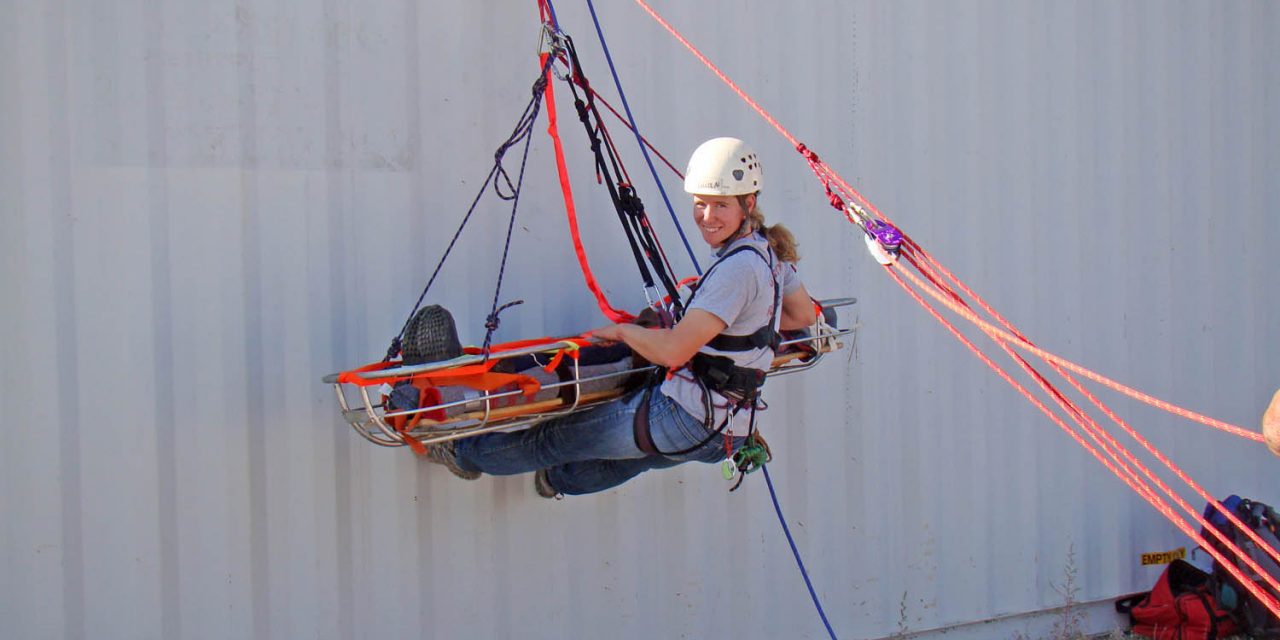
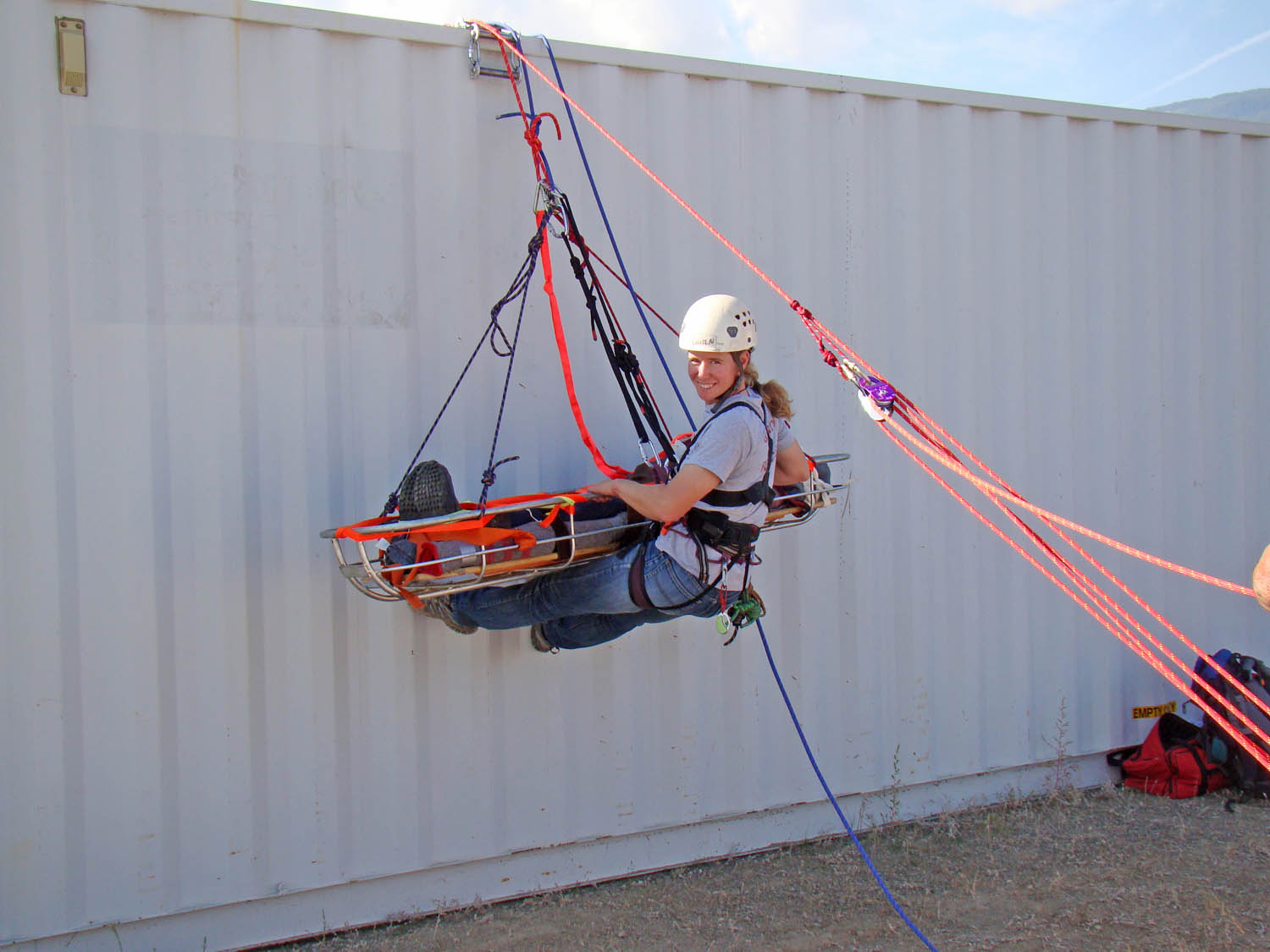
olleen Aven was one of two Oliver-Osoyoos Search and Rescue members who assisted in the rescue of an injured hiker in Princeton last week. She is the group’s rope team lead. Kevin Vetsch was the other local member. (Photo supplied)
Two members of Oliver/Osoyoos Search and Rescue have been recognized for doing a great job in assisting in a dangerous mountain rescue last week.
Colleen Aven and Kevin Vetsch were called upon to help Princeton Search and Rescue to save a female hiker who suffered serious injuries on Johnny’s Hat Mountain on October 20.
The hiker was part of a larger group on the mountain when she was struck by a falling rock.
Upon being notified by the BC Ambulance Service, Princeton SAR responded after 4 p.m. with nine personnel and located the victim on the mountain.
With daylight waning, Princeton SAR manager Randy Rorvik requested the assistance of other nearby search and rescue teams and the Canadian Armed Forces.
With the victim in serious condition and in a very difficult area to access, the initial strategy was to have her extracted by helicopter.
But the Armed Forces Cormorant was not able to make its way to the rescue site.
Later that evening, 19 members of Penticton’s Search and Rescue team, along with Aven and Vetsch, arrived and began to prepare for the difficult operation.
Over the next eight hours, the teams hauled personnel and equipment up the mountain over extremely difficult terrain in order to set up a series of rope stations that would allow the victim to be lowered to the valley bottom.
A Buffalo search aircraft from the Canadian Forces Base in Comox took up station overhead.
For more than three hours it dropped flares down the mountainside to assist rescuers as they ascended the mountain.
“The flares not only aided the rescuers in providing much needed light, but it was a boost to the teams’ morale,” said SAR public affairs officer Randy Brown.
The main priority was preparing the evacuation of the victim, but the team also had to escort four other hikers down the mountain to safety.
By 2 a.m. the rope rescue teams had all of their plans in place and began the long and dangerous journey down the mountainside where the victim was finally transferred to an awaiting ambulance.
She was subsequently transported to Penticton Regional Hospital, where she recovered.
Dale Jorgensen, president of Penticton and District Search and Rescue, said the mountain was an extremely difficult area to access and extricate a victim from.
“We had so many factors to consider with the terrain being so steep, an unstable slope with lots of falling rock and then you add the darkness. Our rope team leaders had their work cut out for them and they performed exceptionally well,” he said.
Aven is the rope rescue team lead for Oliver/Osoyoos SAR. Vetsch is also on the rope team.
Search manager Jim McConnell referred to Aven as their rope “superstar.”
Aven helped set up the rope system used to rescue and evacuate the injured hiker.
McConnell said Aven and Vetsch spent more than 13 hours on the scene.
“It was a good, long haul for all of them.”
McConnell commended the two for their excellent work.
He noted all of the teams work together, and because the volunteers are all trained to the same standard, they can go anywhere to utilize their expertise.
Brown said Aven did an awesome job and should be commended for her work and enthusiasm under very difficult circumstances.
“I have to say I admired her skills, strength and leadership.”
Aven was one of three rope team leaders during the rescue. Her primary role was focused on the bottom half of the evacuation route.
She worked with the teams bringing gear up to the patient and then managed two sections of the rope system to bring the stretcher team down the mountain.
Aven has been involved in several technical rope and river rescues and noted this one was a definite challenge.
There were both scree and grass slopes of varying steepness and no trails.
Aven said that rope systems are simplest when they can follow gravity straight down, but the easiest and safest route for this evacuation required the stretcher to traverse (move sideways across the slope) several times.
This made the rope management harder, but ultimately provided safety for everyone involved.
Despite the hazardous situation, there were no near-misses for the rescuers. Aven said she was never scared for her own safety, adding that knowing the task you need to perform keeps you focused.
The most memorable moment for her was how well the team worked together throughout the evening.
“The flares dropped by the 442 squadron turned the night into daylight and helped us find our route and set up the evacuation more quickly and safely.”
Aven finds search and rescue very compelling.
“When I was looking to volunteer within my community, search and rescue was an organization that matched my skills and interests.”
She noted the SAR community is a great group of volunteers to work with, and provides many opportunities for personal growth.
LYONEL DOHERTY
Special to the Times