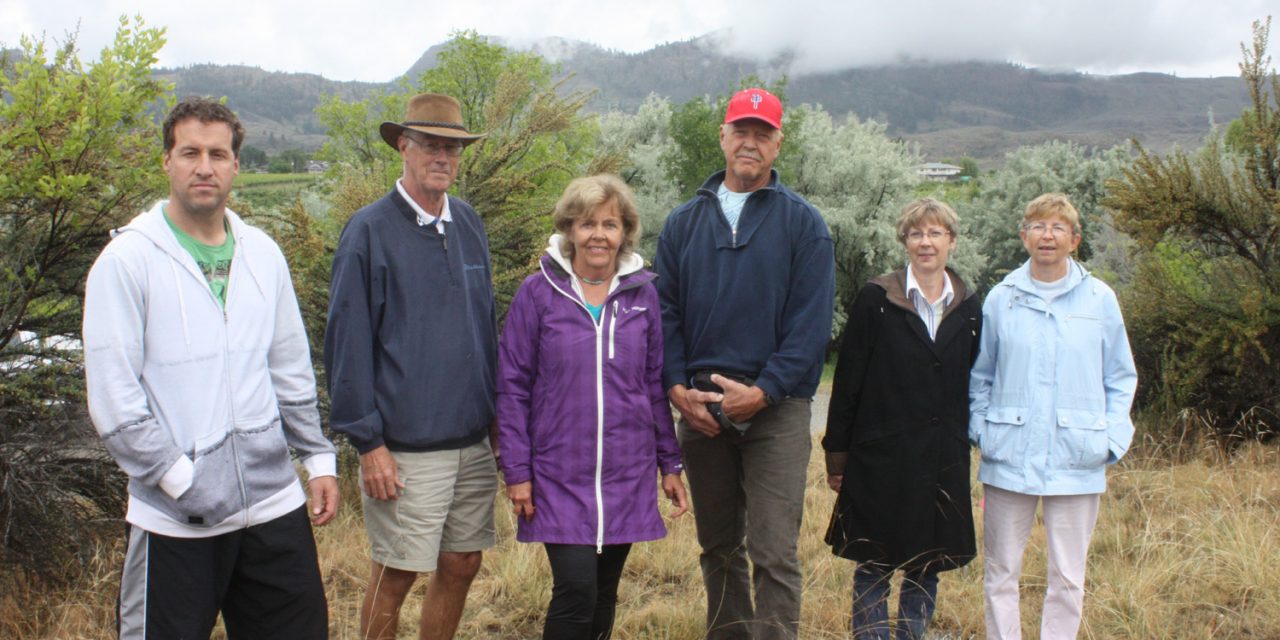
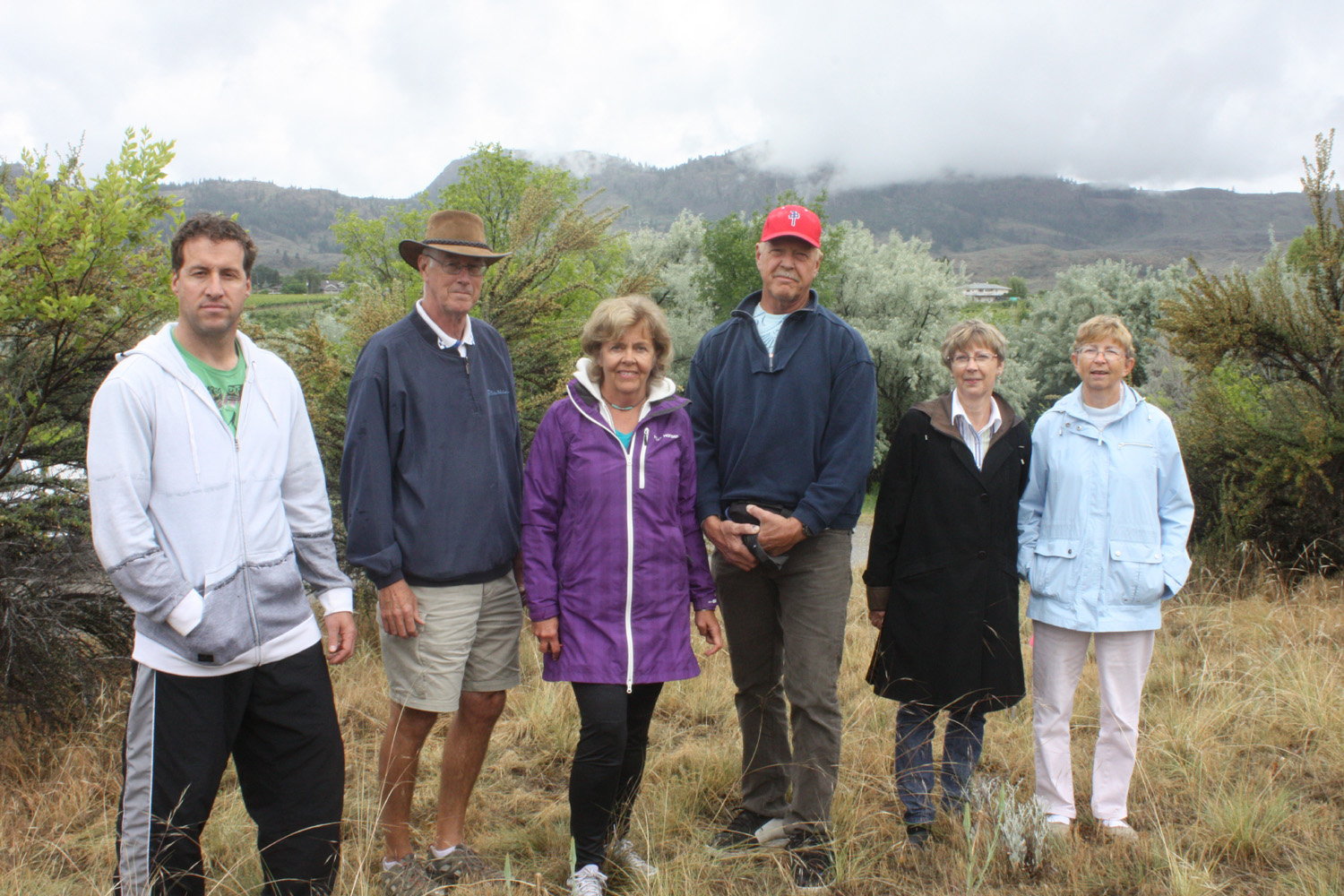
A group of local residents is protesting the removal of trees at Haynes Point Provincial Park.
A group of Osoyoos nature lovers are upset and exasperated that dozens of trees have already been cut down and hundreds more will be removed from Haynes Point Provincial Park in order to plant “ugly bushes” and other native species BC Parks management insist are endangered in the South Okanagan.
Jan Johnson, Carol Osborne and Diane Zorn – Osborne and Zorn are sisters – say they visit Haynes Point Provincial Park several times each week and consider it one of the most beautiful and pristine pieces of land in this community.
Johnson says she was incensed when dozens of Siberian Elm trees were cut down by BC Parks staff last summer in order to plant dozens of Antelope Brush bushes during phase one of the Haynes Point Restoration Project.
Phase two calls for the removal of several hundred Russian Olive trees in the wetlands area of the park, which also serves as a bird sanctuary for dozens of species, said Johnson.
“I only found out about this project after the trees were cut down and it was too late, but it made me very upset,” said Johnson, who has lived in Osoyoos for the past nine years. “When I found out that phase 2 was going to see a couple of hundred more trees cut down this year, I had to speak out and try and do something.”
With phase 2 set to take place this summer and fall, the three Osoyoos women and many of their friends are considering starting a petition to launch a formal protest against the Haynes Point Restoration Project.
Mark Weston, the acting parks and protection area section head for BC Parks, acknowledged that hundreds of trees will be removed from Haynes Point Provincial Park in order to save existing endangered plant species and re-introduce native species that have been part of this region for decades.
However, all trees that will be removed from the park’s wetlands area later this fall as part of phase two would be replaced by new trees that don’t harm endangered plants and vegetation, said Weston.
Johnson says she considers Haynes Point Provincial Park to be the crown jewel of this community and is outraged that BC Parks is going ahead with a project that will see so many pristine trees cut down for reasons she doesn’t accept or believe.
“I walk through that park on an almost daily basis and, to me, it’s the most beautiful part of this town,” she said. “Whenever we have people come and visit us, the first place we take them to is Haynes Point. It’s serene, it’s beautiful, it’s a place to seek refuse and a beautiful oasis and as far as I’m concerned, it should be left alone.
“To think that they’ve already removed so many trees and are planning to cut down a couple hundred more is just unbelievable.”
When she walked through the park late last summer after so many trees had been torn down and replaced with Antelope Brush, she became emotional, said Johnson.
“I walked down there and cried,” she said. “To tear down beautiful trees to replace it with some ugly bushes just doesn’t make a lot of sense to me.”
Zorn agrees.
She has contacted BC Parks staff and voiced her concerns and still doesn’t buy their argument that Antelope Brush is endangered.
“I’ve lived here for many years and this Antelope Brush is everywhere … I don’t buy that it’s endangered at all. There is no shortage of this stuff in this region from what I’ve seen with my own eyes,” said Zorn.
The fact members of the public weren’t informed about the Haynes Point Restoration Project, with the exception of a sign installed inside the park, is very upsetting, said Zorn.
“The fact that this decision was made without anyone from the public having a voice is what I’m most upset about,” she said. “BC Parks is making these important decisions about our park here in Osoyoos and we don’t have a voice in the process.
“We tend to believe that this decision was probably made by a guy in a suit sitting in Victoria who has never been to this park in his lifetime.”
The women believe the intent of this project is to “restore the park to how it looked when it originally opened back in 1938” when it was basically a barren strip of land without any trees, said Johnson.
“It was a treeless sand spit and it was barren and ugly,” she said. “We don’t see any point in trying to bring back the original vegetation at the expense of these beautiful trees. It’s our park, but we don’t have a voice and that’s very upsetting.”
Haynes Point has become one of the most popular provincial parks in the province in large part because of its natural beauty and cutting down trees for the sake of re-introducing rare plants and vegetation doesn’t make sense regardless of how BC Parks management rationalizes this project, said Zorn.
Weston insists the concept behind the restoration project was to protect endangered species and remove invasive trees that were threatening their survival within park boundaries.
“We’re trying to do this with as little impact as possible,” he said.
Any suggestion that BC Parks plans to continue removing trees inside Haynes Point Provincial Park in the future is simply not accurate as his department fully recognizes the recreational and natural benefits to the Town of Osoyoos and its residents, he said.
The suggestion that this project was approved by management outside of this region is also inaccurate as this project was approved after careful review by a staff biologist, district manager from the South Okanagan and himself, said Weston.
The reality is several plant species that have long been part of this region and are endangered and can enjoy a successful rebirth if certain invasive tree species are removed from certain areas of the park, said Weston.
“We have a conservation mandate to protect endangered species … and the decision to remove certain trees was done with ensuring these species would have a chance to survive and for the good of the park in general,” he said.
The argument that the numerous bird species who feed and nest in Russian Olive trees also doesn’t hold up as these birds can thrive in the thousands of other trees in the park and in this community, he said.
All Russian Olive trees that are cut down during this project will be replaced by planting tree seedlings for other tree species such as Black Cottonwood and willow, said Weston.
BC Parks staff did visit Haynes Point last spring to talk to local residents and campers and “most of the people we talked to were quite supportive of this program,” he said. “We’re fully aware this is a beautiful park that is a very popular tourist and recreation area and that’s why we’ve planned these changes in phases and by trying to have minimal impact within the park.”
BY KEITH LACEY
Osoyoos Times