The Okanagan Valley is going to experience a population boom of 180,000 over the next 25 years in large part because of its natural beauty and clean and abundant water supply.
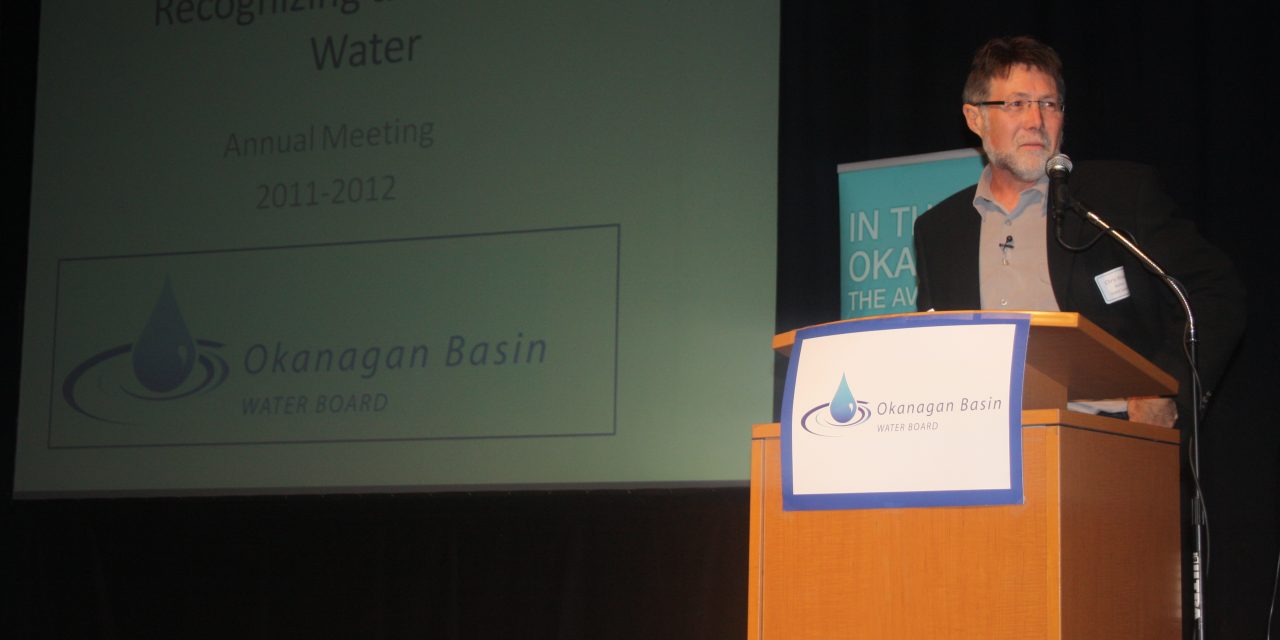
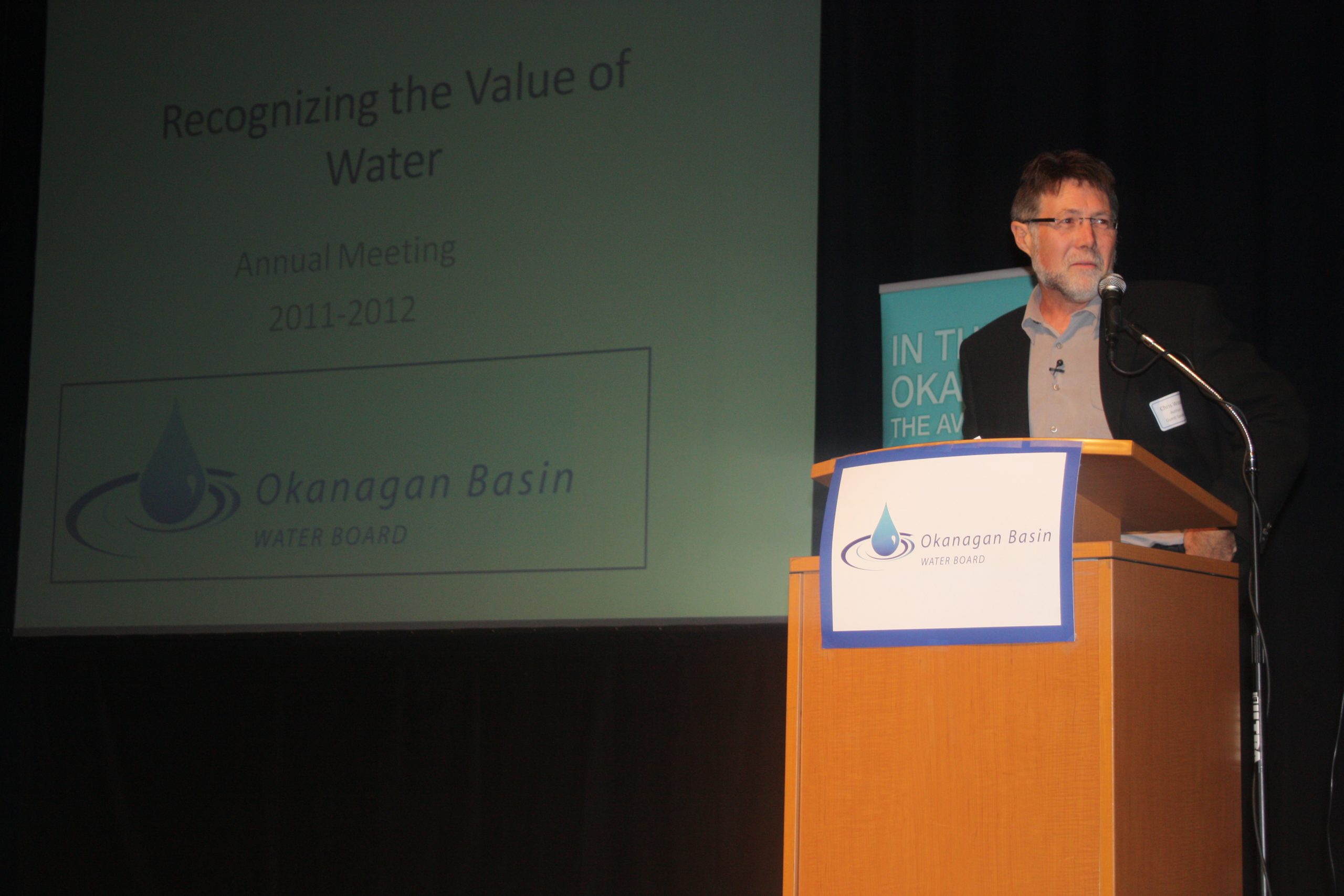
Those words from Chris Wood, an award-winning journalist and author who has penned numerous books and articles about water-related issues over the past 20 years. Wood was the guest speaker at the Okanagan Basin Water Board’s (OBWB) annual general meeting, held last Friday at the Rotary Centre for the Arts in Kelowna.
“People are going to follow the water … and many are going to want to come to the Okanagan,” said Wood, who spoke at length about the world’s growing shortages of clean and abundant water during his hour-long presentation.
The reality is this region is going to face numerous challenges in the coming decades as the population booms, said Wood.
Thanks to organizations like the OBWB, which brings numerous stakeholders together to work on many crucial water-related issues, there’s no reason the Okanagan Valley can’t handle the population influx and challenges coming this way in the next few decades, said Wood.
One thing that is going to have to change is property owners who repeatedly water their lawns as research indicates 24 per cent of all water used in the Okanagan Valley goes directly to outdoor water use and that doesn’t include farm irrigation, said Wood.
“The Okanagan can continue to attract a high value of people and industry or you can keep watering your lawns. You can’t have both,” said Wood.
The beautiful weather, combined with endless agricultural opportunities, water-based tourism and general high quality of water sources are at the heart of the projected population boom that is about to take place, said Wood.
Because there will be extra demands on water sources across the Okanagan Valley due to the increase in population, it is going to become increasingly important for the OBWB and municipal leaders to make clean and abundant water supplies a top priority, he said.
Wood, who lives on Vancouver Island, said only eight countries in the world – Argentina, Australia, China, India, Russia, the United States, Brazil and Canada – produce more than half of the world’s food crops.
However, severe drought problems in many of these areas, including the American midwest, huge population growth in China and India and Australia and Argentina having relatively small population bases and the inability to export large amounts of food, means Canada will continue to be relied upon to grow more and more crops heading into the future, he said.
Climate change is going to make producing food and using water efficiently more important than ever before in the coming decades, said Wood.
The world is going to lose “25 per cent of its agricultural production” in the next 20 years due to severe drought and climate change, he said.
“We’re losing our capacity to grow more food even as we need more food,” he said. “Sixty per cent of the continental U.S was in a drought this past summer … the world’s breadbaskets are losing their ability to produce enough food.”
For hundreds of years, the world produced more trees, water and natural resources than were needed by all of the world’s consumers, but that has changed over the past 30 years, he said.
“That world is gone,” he said. “Since the 1980s … we live in a world now where nature is scarce. We’re in ecological overdraft. We’re running out of stuff. We’re bringing more and more people into the world and not enough stuff.”
The Okanagan Valley and most parts of Canada remain very fortunate that we remain blessed with “natural security” as we do have sufficient natural resources to feed and provide water to our citizens, he said.
Wood repeated that the Okanagan Valley is going to see massive population growth in the next 25-to-30 years as people want to live in areas with quality lifestyle opportunities, beautiful natural surroundings and large bodies of water.
“The Okanagan is particularly attractive … we possess the great natural wealth places like California are losing,” he said. “You’ve been called the Napa of the north. This place is attractive to people with high human and financial capital.”
While most water sources in the Okanagan remain plentiful and clean, “our water is not as clean as we like to think it is,” said Wood.
“We’ve done a great job of cleaning up fetid water … and cleaning up our sewage and the water looks clean and it is, but it’s not as clean as it used to be.”
Industrial pollutants found in household products have become a worldwide epidemic and a problem in the Okanagan Valley as well because water treatment plants weren’t designed and aren’t capable of getting rid of these kind of toxins, he said.
“We need to get smarter in using what we have,” he said. “I call it a return on water investment.”
There are some industries which make significant amounts of profit, but when you measure the ecological damage they cause, something he calls “gross environmental product” as opposed to gross domestic product, they cost society money in the long run, he said.
Wood said organizations like the OBWB must continue to accumulate data and share it with all stakeholders so efficient water quality management systems can be put in place.
Communities should be monitoring water quality, pollution and soil contamination.
“Meter as much of this stuff as you can and share your data,” he said. “We’re living in a new world. We’re living in a world of natural scarcity and we’re going to need new rules.”