By Lyonel Doherty
Oliver Chronicle
A fruit grower in Oliver is calling on the government to help farmers combat deer that are destroying their crops.
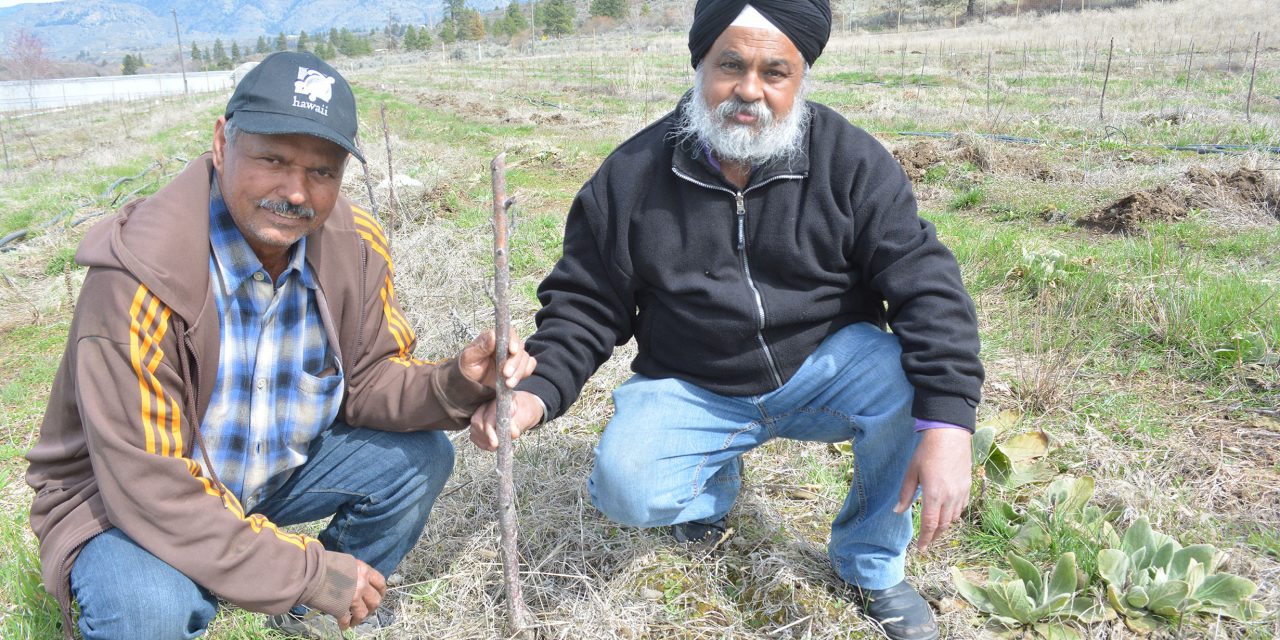
Michael Sidhu says it’s time the province stepped in to help farmers with fencing costs to keep deer out of their orchards.
In 2016 Sidhu planted more than 1,400 cherry trees off Black Sage Road. Now, only about 300 have been salvaged after deer ravaged the crop (which cost him more than $15,000).
At the time he planted the trees, he didn’t have the money to erect perimeter fencing, so he had to rely on other methods to keep the deer out. But nothing really worked.
“We tried chasing them away at night time,” Sidhu said, shaking his head.
He also tried using soap (deer don’t like the smell of it), but that didn’t work either. He even resorted to a scarecrow man with a shirt on it, but that didn’t do the job.
Sidhu said he eventually put up a fence that cost him approximately $20,000. But with crop insurance, irrigation and chemical costs, that doesn’t leave him with much of a profit to live on.
Sidhu said while everything else goes up in cost, fruit prices stay the same. “We’re still getting the same amount of money.”
The farmer said the government used to provide financial assistance for fencing, but not anymore.
In Osoyoos, Area A director Mark Pendergraft said he hasn’t heard much in regard to deer damaging fruits in their orchards.
“That may be because a lot of the orchards and vineyards down here are already fenced.”
As for solutions, Pendergraft said he thinks fencing, if done right, would be more effective than culling the deer.
“The key to fencing being effective is that it needs to be done right and maintained. Dogs and coyotes often dig under a fence and once they have done that, deer will also crawl under. So a tall deer fence with a low electric fence to prevent the digging is needed.”
The BC Fruit Growers’ Association (BCFGA) has continually brought up the issue of fencing at its annual convention, but no help appears to be on the horizon.
President Pinder Dhaliwal said there used to be a subsidy for deer fencing but that was discontinued. However, he stated the BCFGA is trying to convince the government to bring it back under a different program.
Dhaliwal said urban deer numbers are increasing, and with more deer coming down from the hills, more coyotes and other predators are following.
He believes there is a case to be made about the impact deer are having on ICBC premiums as a result of motor vehicle/deer collisions on Highway 97 between Osoyoos and Oliver. Proper fencing would reduce ICBC claims, Dhaliwal contends.
The fruit grower mentioned there are various methods you can use to detract deer from orchards, and some of them work while others don’t. For example, you can use soap and fabric softener, and reflective tape on your trees. But he said these aren’t solutions because they merely push the problem on to the next orchard that doesn’t use any detractors.
Dhaliwal said you can chase the deer with ATVs, but these animals have become so habituated they often return.
“They just stare you in the eye and say, ‘don’t bother me’”
Dhaliwal noted there was a pilot program outside of the Okanagan that managed deer via a culling program. But there was so much backlash from the public due to the “Bambi” (sympathy) syndrome.
The orchardist said that once a deer’s saliva touches a fruit tree, it stunts the growth, so new plantings are particularly susceptible to damage.
Dhaliwal said deer can destroy entire crops, and that’s after you’ve paid hefty prices for the land and per-acre costs to plant the trees.
He suggests that perimeter fencing would be better because you don’t want to see every farm individually fenced, which wouldn’t be aesthetically pleasing for tourists.
The Ministry of Forests, Lands and Natural Resource Operations says there are several ways to protect gardens and crops from wildlife. These include high fencing (the most effective), electric fences, motion-sensing sprinklers and deer-deterrent scents.
In 2016 the ministry began issuing limited entry draws for rural, agricultural and antlerless mule deer in the Okanagan to help control their populations.
The Ministry of Agriculture has a series of programs to protect B.C. farmers from unexpected losses. For example, AgriStability protects orchardists and tree fruit growers against declines in their income due to market conditions, production loss or increased cost of production.