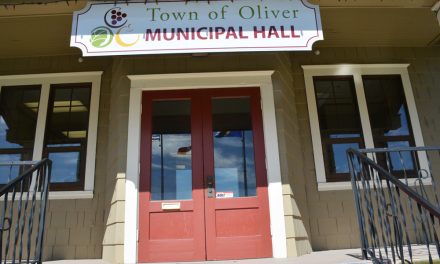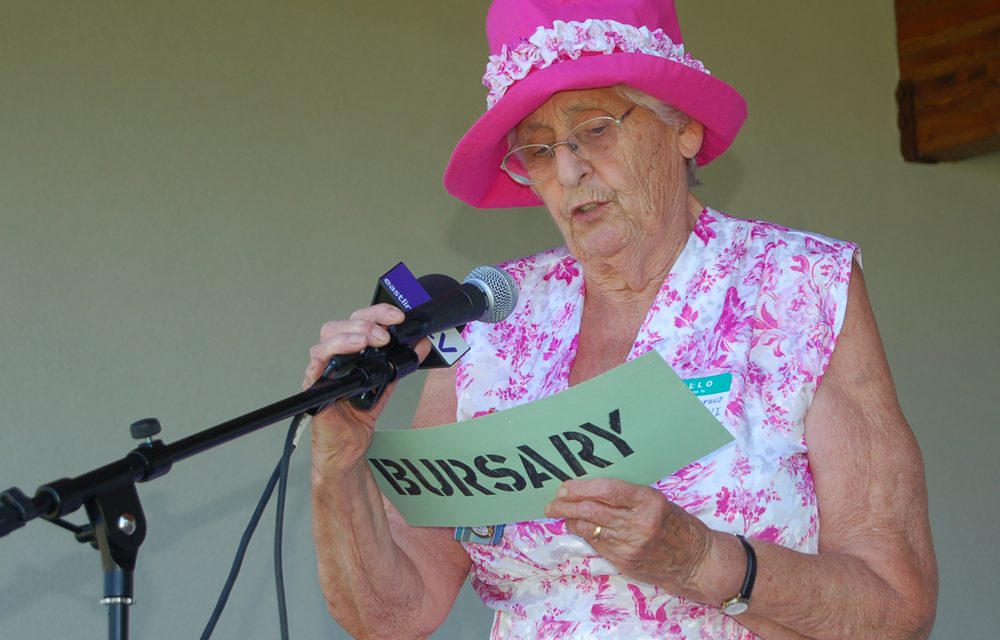
The Oliver Women’s Institute held their AGM on December 12. At that meeting the group made an extraordinary resolution to go into abeyance for three years. Everything is in order and the books will be kept at the Archives in Oliver. This enables 10 women to reactivate the group by contacting BC Women’s Institute president Colleen Hooper or the office administrator Betty Bartlett at the BC Women’s Institute head office, P.O. Box 36, Barriere, B.C., VOE 1EO.
This is an extremely interesting educational organization for women. It was designed for a multicultural nation with women from many cultures. It is non-racial, non-religious and non-political. We are overseen by a superintendent who was a home economist whose job it was to travel around the 17 districts conducting workshops on various subjects of interest, including: health care, raising healthy families, cooking, dressmaking, preserving foods for storage, gardening, animal husbandry, running meetings, conducting research and making resolutions to send to the B.C. government to bring change and assist our members and their families. We created our own programming according to the interest and needs of our members and to address community needs.
We have our own constitution and bylaws. During active times we meet once a week and help each other during the month, sharing and helping meet each other’s needs. Some of our activities included social meetings, walking, quilting, making clothes, birthdays, recipe exchanges, raffles and other various educational and fundraising projects.
Local Women’s Institute groups are connected with other WI groups in B.C., Canada, and throughout the world via the “ACWW” (the Association of Country Women of the World).
Helen Overnes, the current president of the Oliver group, has travelled to eight countries to attend some of the global meetings that occur every three years. At these conferences the ACWW and Women’s Institutes decide where they will help women and girls throughout the world. There have been many successful projects and each is very carefully scrutinized before action is taken. The projects must be run by women, and not governments, and be accountable to ACWW, the overseeing body. The ACWW is a NGO at the United Nations and meets in New York with other NGOs to share needs, experience and help.
The Oliver Women’s Institute started in 1923 when the valley was opening to fruit and vegetable growing in the desert with irrigation, and there were no social services at that time. Communication was by word-of-mouth. Transportation was by foot, bicycle, “shankes” (pony), horseback and the odd car and railway, so everyone had to help each other. The Oliver Women’s Institute put on social events, dances, whist drives, box socials (to meet beaus).
In 1928 we got a VON nurse for health care that included baby clinics and immunizations. The nearest hospital was in Penticton so in 1935 we asked the B.C. government for land to build a cottage hospital. In the early 1940s a hospital committee was set up and the doctor stressed the need for a full operating hospital as there were two mines. We were able to secure a much larger lot than was originally planned. Our group was told we could have the hospital if we paid 50 dollars to survey the land, and we did.
In 1942 our new, complete hospital was opened and was called St. Martins Hospital. It was run by the Victoria St. Ann’s Nuns. In 1973, Oliver’s next hospital, South Okanagan General Hospital, was opened and was run by a hospital board from members of the community.
We worked for clean water for rural residents as many of them used irrigation water or wells for five months each year. Pre-natal care was taught under education and was too expensive and inaccessible. It was provided in Penticton at a cost of $80 per session. We asked to have it back and included under public health. One year we had 80 women who were 18 years of age or under, with no pre-natal care and these women were going to Penticton. Every third woman had a C-section. World Health says that no more than 10-15 should be delivered this way. Penticton reduced it until it was one in five. SOGH used to deliver 100-160 babies a year.
Working on the reading program at Oliver Elementary School, the speech and language pathologist advised she had 55 preschool children in need of help. At that time there were only three speech pathologists working north of Hope.
We sent a resolution to have more trained speech language pathologists and five years later we got one in Oliver. Next was a traffic light at Highway 97 and Similkameen Road, then chirpers and timing to help people cross safely.
A study was made in 2005 for housing for people over 55 and under 55. Oliver only had 29 units rented at 30 per cent of income for persons under 55 with low income and disabilities, but seniors had plenty of options. Affordable rental housing units at 30 per cent of income for regular singles, young married couples, people with disabilities and empty nesters were non-existent. By 2004 we had lost 100 affordable rental housing, which were little houses, and families are paying 60 per cent of earnings on rent, hence the big use and need of the food bank. What is needed is a not-for-profit rental housing society to raise 4-6 million dollars for affordable housing.
Other needs we have is to bring public health back in the centre of town for teenagers to get information. We need a public health medical clinic with several doctors to take turns providing surgery and open at night five days a week 6-8 p.m.
This would stop cluttering up our hospital emergency that often requires waiting three hours to be seen.
Helen Overnes, Oliver