By Lexi McFarlane, Times Chronicle
Bringing wells that have been disused in Oliver back into play to boost drinking water levels would be a complex process that may prove too inefficient to execute, the Town has found out.
A report presented by Joseph Trottier, an Engineering Technologist for the Town, detailed the water quality of both the CPR Pumpstation and Lions well, which were previously removed as drinking water sources due to higher than allowed levels of uranium in the water.
A key question the report sought to answer was whether or not the water from those wells could be turned into consumable drinking water once again.
The wells are not active for potable purposes, but the Lions well is currently being used for non-drinking uses such as watering lawns and plants, it was noted. This was a point Water Councillor Rick Machial touched on, as a means of saving water elsewhere that could be used for drinking and irrigation.
“That’s an awful lot of water (we’d be) using to water those lawns,” Machial said, of the water from consumable sources.
When the wells were taken offline, they had exceeded the maximum allowed concentration (MAC) of 0.02 milligrams per litre of uranium in the water. A recent study of water samples from the Lions well determined that the current concentration is 0.0317 milligrams per litre, still higher than permissible.
Trottier’s report looked into both blending the water from those wells with ones currently active, as well as ionized treatment of water prior to bringing those two wells back online.
The blending option’s testing found that it would only be functional for nine months out of the year due to seasonal constraints, and would have to be sampled regularly to meet the guidelines set by Interior Health.
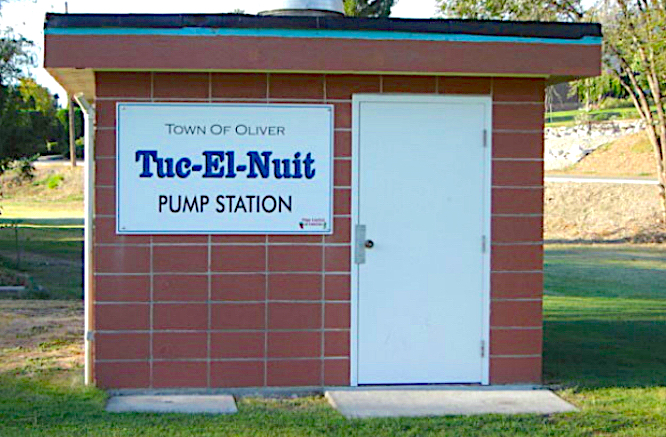
More importantly, there would be an increased likelihood of water quality advisories, which also require Interior Health to be involved to rescind those advisories. The blending option, it was noted, may also demand more complex operations, such as Rockcliffe and Tucelnuit wells running simultaneously.
Water ion treatment limitations are also significant, but more so for the costs required. The wells would require their own treatment facility and periodic ion replacement, with estimated costs given back in 2009 of $2.5 million certain to be much higher in 2026. Discharges of brine and sodium could affect water quality as well, and high sodium levels may render the water unusable for irrigation.
In terms of infrastructure, the CPR Pumpstation is in need of several upgrades to bring it back into working order. On top of refurbishment of the well, there would be pump and motor replacement, replacement of abandoned watermains with a completely new transmission line, and the addition of chlorination and HVAC systems required. Supervisory Contro and Data Acquisition installation would be needed, and necessary studies would have to be performed for the station to comply with operating permits.
For those reasons, as well as the additional staff potentially needed and land having to be acquired to fulfill additional components for activating the wells for drinking use, staff recommended against bringing that function back into service.
Councillor Aimee Grice agreed that “it doesn’t make sense” to try and pursue reviving those two water sources for drinking use currently.
“But if we get to a point where we’re potentially looking at five to eight million dollars for a new well, maybe (then) we revisit this,” Grice said.
In receiving the report for information, the sentiment issued by Councillor Terry Schafer was that this would not be the last report that Council heard about the wells.
“When you consider that we’ve used lake water for the parks and the cemetery, the airport, and the high school… maybe there’s some blending there in the future,” Schafer said. “But we’ll be talking about this for years to come, I’m sure.”