By Don Urquhart, Times Chronicle
The Okanagan Basin Water Board (OBWB) knows a good bet when it smells one, committing $200,000 towards funding a UBC Okanagan (UBCO)-led pioneering research that aims to replicate dog’s ability to smell the DNA of invasive species.
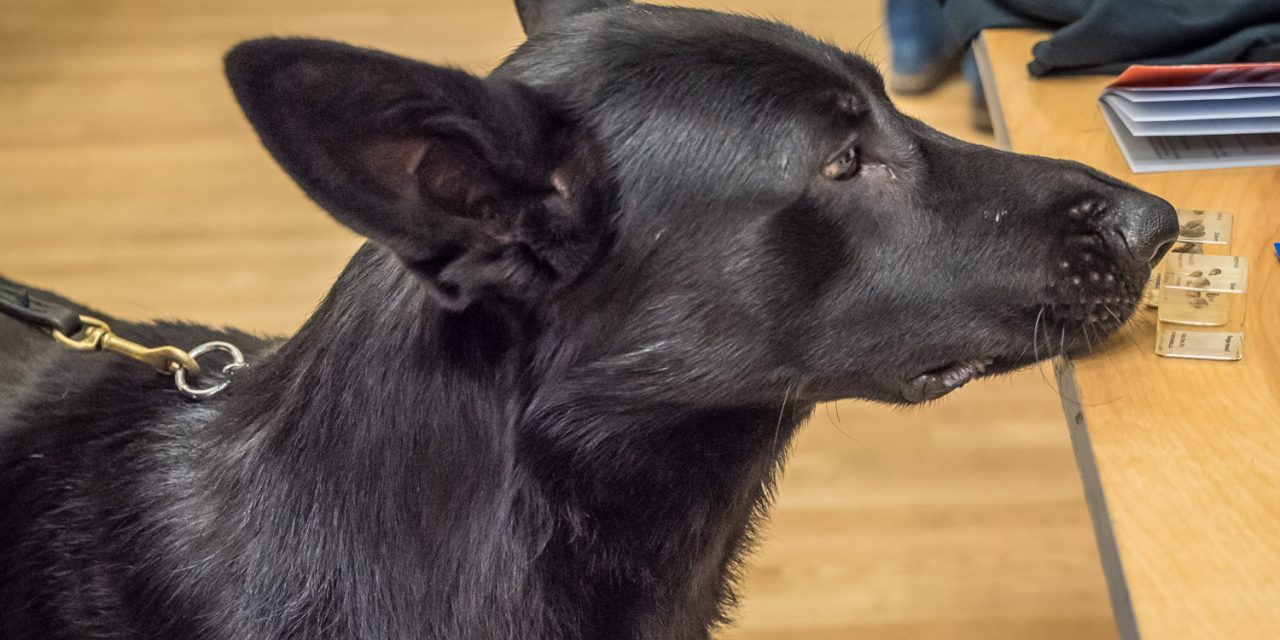
The project aims to develop a rapid, in-field environmental DNA (eDNA) detection tool – dubbed an “artificial dog’s nose” – to combat the devastating threat of invasive zebra, quagga, and golden mussels in B.C.’s freshwater ecosystems through early detection.
The OBWB’s commitment of $100,000 per year over two years is a critical step in closing the project’s funding gap and securing a matching $60,000 in salary support that was contingent on further investment.
“This catalytic funding will now incentivize provincial, federal, and industry partners,” to contribute the remaining funds in order to fully realize the project.
“The OBWB has an exceptional history of supporting innovative, science-based solutions to protect the Okanagan Basin,” says OBWB Chair Blair Ireland following the Board’s unanimous approval at the Oct. 7, 2025 meeting.
“This project offers a unique opportunity to support the development of a powerful new tool that could transform how British Columbia defends its lakes and rivers from invasive mussels.”
Invasive mussels pose one of the most urgent threats to B.C.’s freshwater ecosystems and infrastructure and are forecast to cost billions each year in removal costs from infrastructure, lost tourism and damage to the native ecosystems should they gain a hold in local waters.
Now present in Manitoba and Idaho (and widespread across the Great Lakes), “these species are edging dangerously close to our province, and once introduced, they are nearly impossible to eradicate,” the OBWB said.
The gold standard in invasive mussel detection is currently trained mussel Invasive, but with only two trained dogs to support the entire province, this system is both under-resourced and unsustainable, it is commonly acknowledged.
Dr. Michael Russello, a Professor in UBC Okanagan’s Department of Biology, is leading the development of this field-deployable protocol that can detect the genetic material (eDNA) shed by invasive mussels on watercraft within minutes. Russello is working in collaboration with UC Davis and Queen’s University.
“This is a unique opportunity to transform invasive mussel prevention,” says OBWB Chief Operating Officer James Littley. “The cost of an invasive mussel infestation in BC would be measured in billions of dollars in damages to infrastructure, ecosystems, and the economy.”
The real-time results – available at every inspection station – will create a more effective buffer zone, not just for B.C., but throughout the entire Pacific Northwest, Littley says.
The technology is based on the SHERLOCK (Specific High-Sensitivity Enzymatic Reporter Unlocking) platform – a CRISPR-Cas system – which can bring the precision of a laboratory analysis to a mobile setting.
Though initially developed for medical diagnostics, SHERLOCK has shown great promise for ecological studies and has been successfully applied to monitor and detect fish species.
Beyond invasive mussels, the resulting technology holds the potential to be expanded to detect a range of other aquatic invasive species and even pathogens, such as whirling disease, dramatically improving the province’s early detection and rapid response capacity.
The OBWB’s contribution of $200,000 over two years, beginning April 2026, is contingent on full project funding commitments from other sources. The Board also committed to supporting and seeking fundraising opportunities to secure the remaining budget.
Russello presented a draft two-year budget of $460,000. This would cover a post-doctoral researcher, equipment, and travel between California, Ontario, and BC.
In addition to funding the UBCO project, Directors approved sending letters to federal and provincial ministers urging for greater collective action on invasive mussel defense, including but not limited to:
Federal Action: Providing matching funds to western provinces to offset the $1 million+ BC currently reallocated for border inspection costs and investing in research and innovation like the eDNA tool.
Provincial Action: Delivering regulations for mandatory watercraft inspections and pursuing a Western Canada Mussel-Free Zone with Alberta and Saskatchewan.
The OBWB is a local government agency and collaborative partnership between the three Okanagan regional districts, the Okanagan Nation Alliance, the Water Supply Association of BC, and the Okanagan Water Stewardship Council.
The OBWB’s mandate is to protect and enhance water resources in the Okanagan Basin — a transboundary (Canada and US) watershed nearly 200 km long and covering 8,000 km². This unique watershed includes the headwaters of the Columbia River and six major valley-bottom lakes: Wood, Kalamalka, Okanagan, Skaha, Vaseux, and Osoyoos.