By Don Urquhart, Times Chronicle
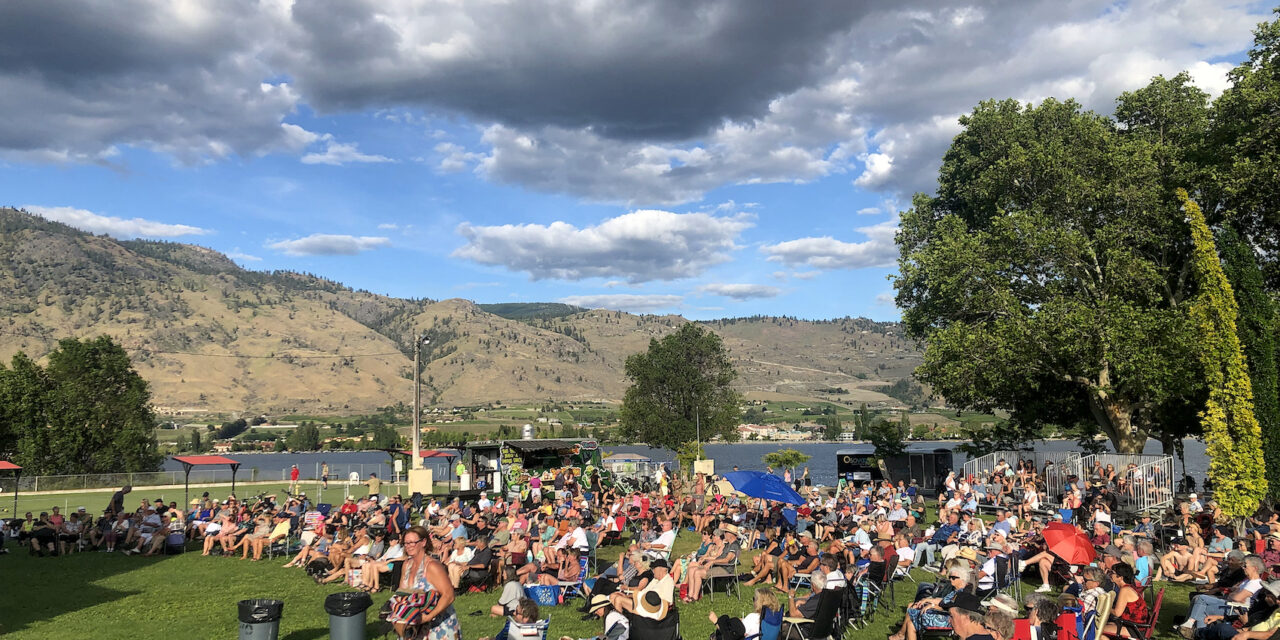
Osoyoos Council discussed proposed changes to the town’s Special Event Policy which is getting an overhaul to streamline and make procedures simpler and more transparent, during its Committee of the Whole meeting on Feb. 11.
Presenting to council, Gerald Davis, Director of Community Services noted the policy was last updated in May 2017. As Davis explained, the Administration is attempting to reduce the complexity of the special event application process that is currently convoluted.
Part of this process involves rolling together several pertinent bylaws such as Recreations Services Fees and Charges Bylaw 1180, Administrative Fees and Charges Bylaw 1331, Good Neighbour Bylaw 1277 and the Fire Protection and Fire Safety Bylaw 1333.
In August 2024, Council also approved an amendment to the Recreation Services Fees and Charges Bylaw to bring fees for various events-related costs up to date.
A number of these changes directly affect special event applications including things like arena parking lot fee, set up fee, staff overtime fee, charges for rental booking cancellations, and equipment damage deposits, among others.
There are a number of new additions including the town’s new Special Event Trailer which along with the contents were purchased utilizing Resort Municipality Initiative (RMI) grant funding.
The trailer is being offered at no charge for non-profit groups holding special events. The contents include high vis vests, misting fans, sandwich board signs, portable safety barriers, traffic cones, delineator posts, garbage cans, shade tent, extension cords and a portable sound system.
Also to be included is a requirement for liability insurance, up from $2 million to $5 million and in some cases, like fireworks events, potentially up to $10 million. This would be dependent on the type of event and the risks associated with it as determined by the Municipal Insurance Association (MIA).
Davis noted that most of the special event organizers go through MIA, which the town uses for all its insurance purposes, as it tends to be the most competitive in this realm.
A traffic management and safety plan will also be required to be filled out detailing plans in case of emergencies, and notification to businesses if road closures are approved, for instance.
A fireworks permit form must be submitted for pyrotechnic displays according to the Good Neighbour Bylaw and it must be submitted 21 days in advance. And any campfire or open fire requires a permit form to be filled out with approval by the Fire Department prior to the event.
With the additions to the special event package Davis notes “it has become a very comprehensive document” that encompasses several bylaws and policies.
“The special event application process ensures our local events are organized properly and the Town of Osoyoos is diligent in reducing or eliminating liability issues. Having a process that is efficient and thorough ensures we are supporting the many volunteer groups who make our community so appealing and vibrant,” he added.
During the discussion Councillor Johnny Cheong raised the issue that with the adoption of fees for non-profits and the increasing requests for funding, that there might be an increase to the grant budget, “because really its just moving money from one part to another”.
Davis responded that with a more fulsome fee schedule and council’s nod, “there would probably be a very good appetite to increase community service grant funding.”
Discussion then turned to whether the Administrative Fees and Charges Bylaw should be amended to implement a nonprofit fee for special events and aspects like washroom cleaning? Currently there is no charge for the application submission, tables and chairs or additional washroom cleaning for non-profit groups.
The question then became one of “should all fees reflect actual costs and any requests for either rental or town labour costs?”
Davis noted that in doing so it would create a more transparent process that illustrates the actual costs of events and the total amount of funding provided to non-profits/events. This information would also help with budget decision making.
Rod Risling, Osoyoos CAO added that “the last thing the Administration wants to do is put hardship on these hard working groups at this time.” Mayor Sue McKortoff noted that people have been used to getting things for free when in actual fact there is a cost to the town.
“And so we need to make sure that as we go along and put some of these things in place, that we explain why they’re there and why it’s necessary for our town staff and for our budget to make sure we all understand what we’re spending the money on,” she said.
Risling underscored the intent to make the process transparent. “This isn’t an attempt to be a money grab. It is an attempt to show transparency to people and to provide Council with that flexibility, to ensure that they’re supporting organizing that they deem most important to the community.”
He added that it’s important to again mention that “the volunteers are the lifeblood of the community and events do nothing but improve our economic driver of tourism and provide a lot of events for our locals. So it’s just providing that transparency.”
Cheong said he would support the implementation of fees for non-profits “as long as there are adjustments to the community services grant , which basically makes it a net zero cost to those organizations.” This would help satisfy the desire for a transparent process, he added.
The item was set aside for a later date with Davis noting that any change in fee or new fee would require coming back to council for approval.
Council approved a three week time frame for processing applications but noted that if resources are available the town could accommodate urgent event requests.
The topic of liability insurance amounts saw substantial discussion with Councilor Jim King suggesting that the size of the liability insurance be tied to the number of participants at any given event.
In response Sarah Keller, Community Programmer highlighted that it’s not necessarily the number of people involved, but rather the activities that are being undertaken.
The level of risk “I think should be most likely defined by MIA, because they’re the ones that would deem an activity high risk or not,” she said.
Currently the town requires $2 million in liability insurance – $5 million for fireworks – but would like to see it raised to $5 million because that is the industry standard, Keller said. And fireworks would possibly be raised to $10 million.
Summarizing the discussion, Risling said: “I think what we’re hearing is that we want to ensure that the amount of protection that’s on the event is reflective of the activities.
“And I think administration has indicated that we work with MIA to make sure that the amount of coverage that these organizations have to get is reflective of the risks associated.
“I think the last thing that Administration wants to do is put a new financial burden on these entities but at the same time we want to ensure that they’re protected. So we certainly will take that into consideration as we dive deeper into the requirements of the various organizations,” he said.