By Roy Wood, Special to the Times Chronicle
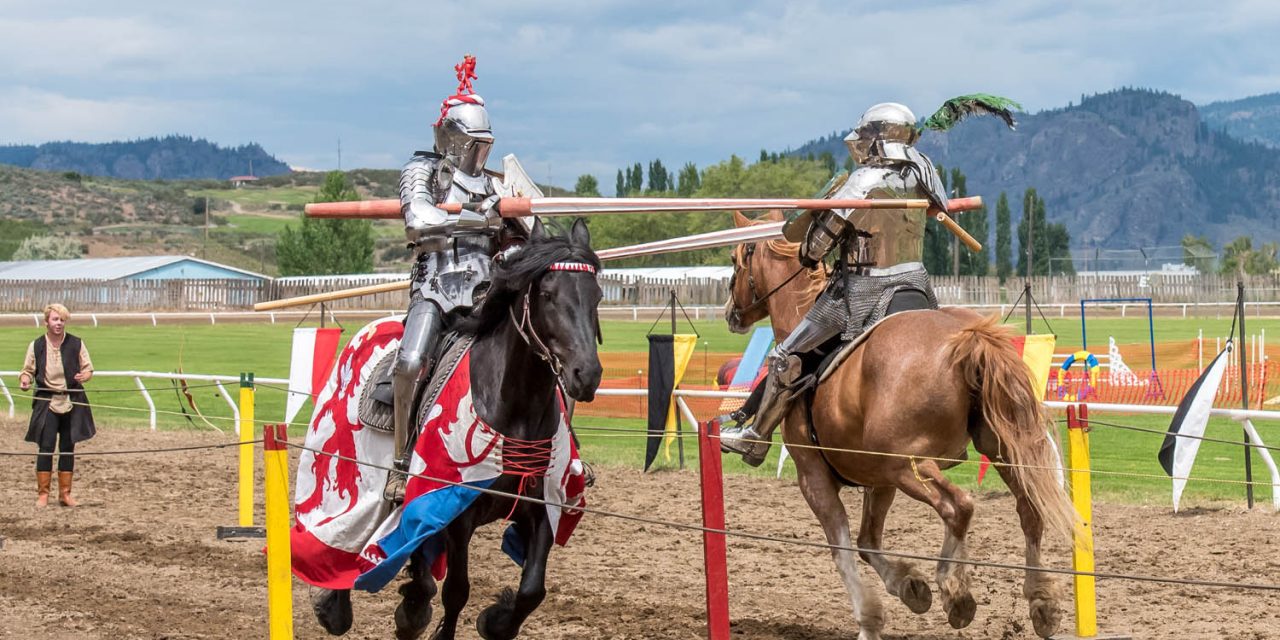
Desert Park is looking for about $100,000 from the town of Osoyoos to repair the 60-year-old barns that house 30 or so boarded horses, which are the core business of the organization.
Unfortunately, the group missed some steps in applying for a Community Service Grant and will likely need to start over to get into the long cue of groups seeking financial support from the town.
In a presentation to a council committee on Tuesday, the group said two of the five barns at the facility were built in the early 1960s and are in dire need of repairs, which would run to about $35,000 each.
Fixing the other three barns, which are considerably newer and less decrepit, would cost a total of about $35,000.
In an interview following Tuesday’s meetings, Councillor Jim King told the Times Chronicle “There is a process (Desert Park) has to go through” to be considered for a grant. Since the group didn’t take the prescribed steps, its application didn’t make it onto the list of grants approved by council Tuesday afternoon.
King said that community services director Gerald Davis agreed to speak with Desert Park to try to get them on the right track.
At the Tuesday morning council committee meeting, Desert Park tried to make its case for a grant.
According to a written submission, Desert Park opened in 1961 and has been in use continuously since then. Its heyday was toward the end of the Twentieth Century during the days of an interior BC circuit of thoroughbred horse racing venues that included Kamloops, Vernon and Princeton.
Parimutuel racing faded, however, with a few races in Osoyoos through the 2010s and the last one in August 2016.
Since then, Desert Park has been primarily a boarding place for local and out-of-town equestrians. There are currently 29 horses in residence. Boarding fees are $150 per month, but Desert Park spokesman Nathan Ondrus told council the fee is set to jump to $200 next month.
He said the organization has some other revenues, including an annual dance, barrel racing and concessions, which amounted to $16,000 in 2024.
According to the submission to council, barns A and B will be repaired stall by stall, with the outside wall framing being replaced using pressure treated lumber for the base and two-by-fours from the base to the roof trusses. The outside walls will be strapped and then cladded with metal siding. Interior walls will be of half-inch plywood.
Electrical will be upgraded and plumbing will be replaced or repaired as needed. The work will be done by a combination of paid and volunteer labour.
The estimates submitted call for $18,628 in materials, $11,500 in labour and a $4,500 contingency for each of barns A and B.
Plans call for barn A to be done first and then barn B. Estimated time is five to seven weeks each.
The submission was vague on the timing of the project. Counsellor King asked Ondrus whether the project could proceed over three years rather than all at once.
“Yes. That would work. Anything would be appreciated, just to start making some progress up there,” he said.
In its conclusion, the presentation said: “Desert Park humbly submits this request for funding, to continue on with the repairs and upgrades that have been happening over the past few years at the park.
“2024 saw 30 full-time horse boarding at the peak of the summer. We currently have one thoroughbred breeder who has wintered his horses at the park from Alberta, as well as the local equine enthusiasts.
“Our desire is to have the boarding facility continue to grow, and support our local equine community and with these repairs, the barns will be given a new lease on life.”