By Sebastian Kanally, Times Chronicle
Are outdoor water meter pits the best option, should there be tiered billing or non-tiered billing – these were just some of the questions that resulted in the decision around implementing universal water metering becoming deferred again.
The Regional District of the Okanagan-Similkameen (RDOS) board of directors is facing the decision of how to proceed with a universal water metering plan and accepting an invitation to participate in a universal metering pilot project commencing in early 2025.
After a short presentation to the board, Shelley Fiorito, project coordinator of public works and Liisa Bloomfield, senior manager of utilities took on a barrage of questions from the board that ultimately led to the decision to defer until Febuary at the latest.
While the board did pass the motion to accept the invitation to participate in the pilot project, there were too many unanswered questions for the board to make a decision on implementing the plan across all RDOS water systems.
Jason Weibe, mayor of Keremeos for example is in favour of universal metering but disagreed with the proposed tiered billing structure which was built into the recommendation.
He explained it “disproportionally affects people who can least afford it, if you have means then doubling it really doesn’t mean much, but it does for low-income families and different folks who might have more use of the water. We don’t pay more at the pump for gasoline. The punishment in itself is that if you need more fuel you pay more but it’s the same price.”
Weibe’s position did not get explicit support from other directors but did bloom into a wider conversation about pricing.
Fiorito tried to explain that they were not intending the structure to be punitive, “the intention is to set the tier so that it’s mimicking and very close to what they are paying currently.”
Rick Knodel, director of Area “C” rural Oliver, expressed some concerns about farms and the unexpected impact of water metering.
“We have more and more farm areas that are becoming a part of metered systems and that was brought up at Union of BC Municipalities (UBCM) as a very serious situation because now we are using treated water on farmland.
“Of course, there is an expense to that and there is also the potential for increasing fire risk by basically getting the cost to a point where people who are on the fringe, the actual interface of the community, are pulling back on their watering and creating a higher risk area.”
Fiorito tried to ease the concerns by saying “as far as the AG (agricultural) properties, when the AG parcels are metered, if they are designated as a farm use under the various acts, then there would be a different rate, there would be an irrigation rate for those. Usually, we would have the domestic, residential, then the agriculture rates.”
A large factor for the RDOS wanting to make the change to implement universal water metering is that they claim it’s proven to reduce water consumption and they want to acquire data about how effective setting water restrictions actually are.
“Metering helps give us that quantifiable value that tells us how successful our water restriction application is,” Fiorito said.
Mayor of Oliver, Mayor Johansen commented that “we haven’t found that they are so great at reducing water consumption . . . We got our report last council meeting, and it was interesting that our water consumption, even though we went to stage one, watering every other day, our consumption never dropped. People are just watering twice as much every other day.”
Director of Area “E” Naramata, Adrienne Fedrigo, did not want to support the project until RDOS staff discussed the project with the Naramata Water Committee and how it would impact their community.
The directors still had a lot of varied questions and concerns with how the project would actually roll out and therefore could not make a motion at their meeting.
Another issue some of the directors had was the cost of installing the meters. The RDOS wants most of the meters to be pit meters, which are installed in a pit dug near the front of the property as opposed to inside the house.
Fiorito explained that this is because many people’s irrigation systems are tied off from the road and would not be tracked by a meter inside the house.
“Currently we are estimating somewhere between $3,500-$5,000 per, it’s really difficult to provide an exact number because it’s going to be based on whatever the excavation looks like, so if it’s through rock it’s going to be more difficult to facilitate, then it would through soil, but that’s the estimation currently.
“The way we have it set up is we are funding it through the budgeting process, or we are looking at grants and pilot projects to assist with that funding, it is not something that will be billed directly to the homeowner.”
But it was clarified that if they were to receive no grants then the costs would be recovered through water rates.
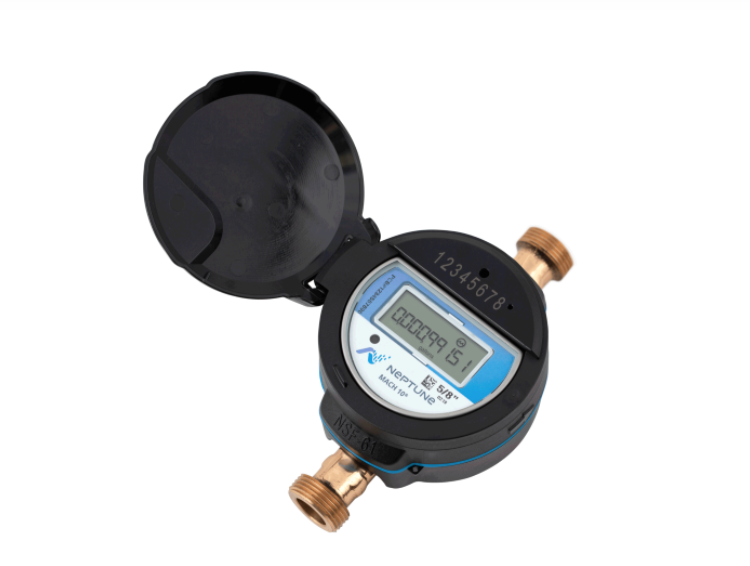
The RDOS currently runs 10 water systems across the region and only one, the West Bench Water System, is fully metered using Neptune technologies water meters. Oliver and now Osoyoos as it rolls out its universal water metering program based on Neptune meters.
If passed, a new universal water metering program would apply to around 3,200 water system users, who do not currently have water meters, across the region.
The topic will come before the board of directors again before February after it has been discussed with the Naramata Water Committee and RDOS staff collects answers to some of the director’s concerns.