By Don Urquhart, Times Chronicle
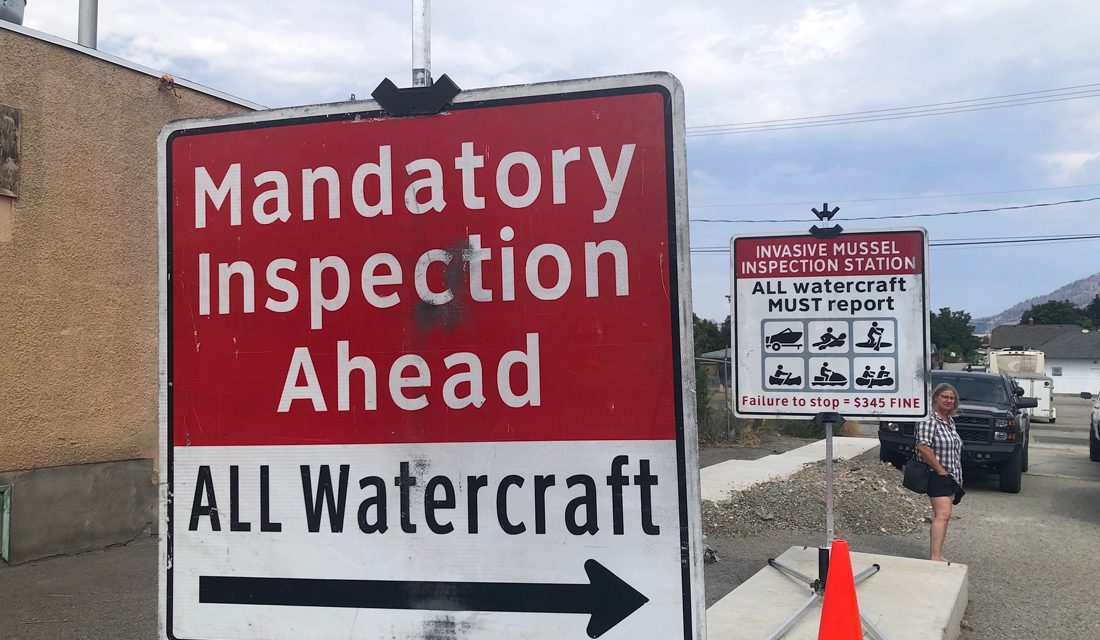
The recent meeting of the Okanagan Basin Water Board saw discussions preeminently focus on the problem of invasive mussels, how to keep them out of Okanagan waters and what to do should they be introduced into the Okanagan basin.
Lisa Scott executive director of the Okanagan and Similkameen Invasive Species Society (OASISS) updated the board on 2023 invasive mussel outreach efforts.
OASISS receives funding from the OBWB to extend outreach of its Don’t Move A Mussel (DMM) campaign to water recreationists, retailers, yacht clubs and others.
The OASISS provided mussel information materials to
178 businesses, interacted with about 3,360 people at boat launches, community events and youth camps, and surveyed 1,237 watercraft users.
They also collected 131 water samples from five lakes with test results showing no mussels detected.
Invasive mussel prevention
The board was also updated on prevention efforts with the first meeting of the Okanagan-Interior Invasive Mussel Working Group held on March 8.
The attendees – with nearly 100 registered – were to include representatives from provincial and local governments, chambers of commerce, tourism, marinas, watershed groups and others. Osoyoos Mayor Sue McKortoff attended as the town’s representative.
Top of the agenda was a discussion around what can be done to prevent zebra and quagga mussels from arriving in the BC Interior, how to stop or at least limit their spread should they arrive, and how to prepare for their potential arrival.
On the topic of limiting the spread of mussels should they spread to the Okanagan McKortoff noted that in Lake Mead in Nevada and Arizona where invasive mussels have taken hold, boats are not allowed to be removed from the lake to use elsewhere to prevent spread.
The meeting also heard that more checkpoints are needed and possibly a sticker program to help promote awareness. “The unfortunate thing is that Idaho has absolutely the best prevention messaging and yet that’s where they’ve spread now. It’s pretty scary.” She notes there’s a lot of information available and she urges everyone to read about it.
The board also received a new map showing mussel vulnerability in the Okanagan based on water chemistry. The map will help direct resources to at-risk areas.
In Lake Mead, underwater divers with high pressure hoses must undertake an at least twice a year routine to remove the mussels from water intakes at both the Hoover Dam and Southern Nevada Water Authority’s water intakes.
The organization also received letters from six organizations supporting the OBWB’s call on a temporary boat moratorium, pull-the-plug legislation, and increased federal funding support for BC’s inspection stations.
New amphibious milfoil harvester
The OBWB’s new milfoil harvester – built in Germany and the “latest and greatest” according to McKortoff – is scheduled to arrive at the Port of Montreal in early March with delivery to Vernon anticipated by the end of the month.
The Water Board is planning to host a public event in June to officially showcase and launch the machine once harvesting season begins.
A benefit of the new harvester is the fact it is partially collapsable and may be able to squeeze under the Osoyoos Trestle Bridge to get from the North Basin to the South Basin of Osoyoos Lake, according to McKortoff.
She adds that it will likely be on Osoyoos Lake this summer.
Conservation efforts
The board received a report on its 2023 Make Water Work outdoor residential water conservation campaign.
Highlights included two new garden centre partners in the valley, advertising on billboards, TV, radio and social media, wrapped vehicles and more. In all, the campaign delivered more than 6.7 million views online.
With a budget of $52,670 and in-kind support, staff delivered a campaign worth $77,867.
The report will help inform Make Water Work 2024. A new communications piece for agricultural water users was also shared with the board and is available here.
The OBWB has also been supporting the Province in promoting its “Decoding Drought” community workshops aimed at answering questions ahead of another potential drought year.