By Don Urquhart, Times-Chronicle
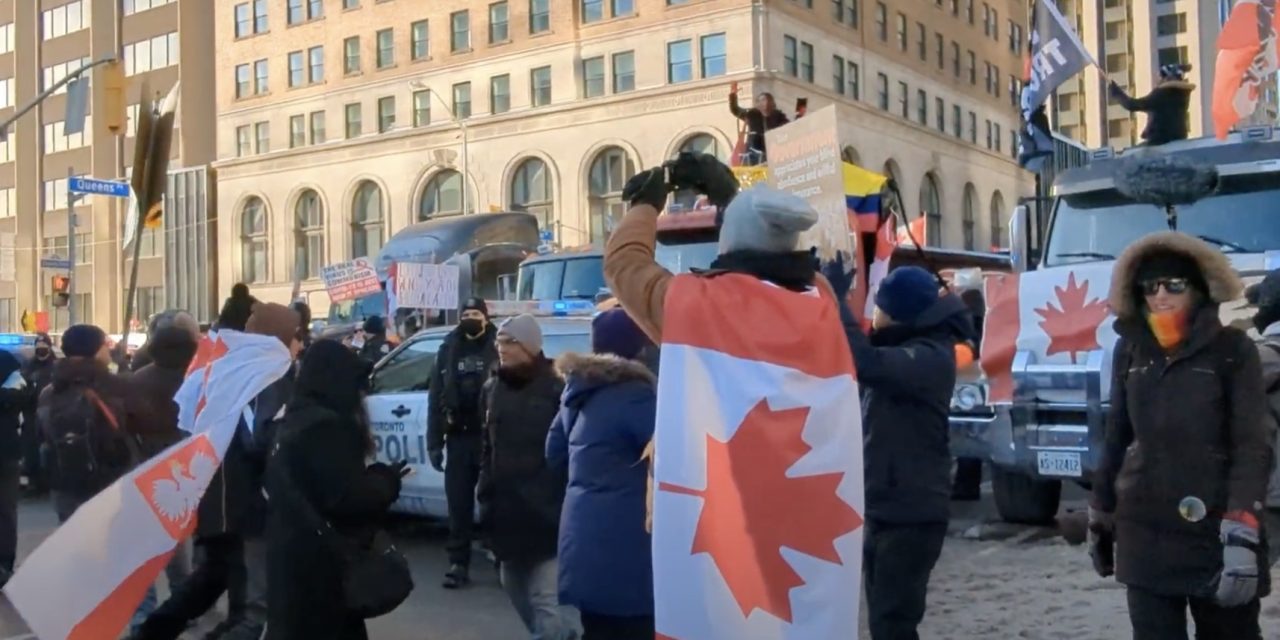
Prime Minister Justin Trudeau has invoked the Emergencies Act for the first time aimed at removing protest blockades that have crippled Ottawa and cut trade flows at key border crossings.
Trudeau said it was an act of “last resort” with the invocation enabled for a maximum of 30 days although the government said it hopes to revoke it earlier. The army will not be called in, nor will the Charter of Rights and Freedoms be suspended, according to the government.
Under the law, if an emergency does not extend to the whole of Canada, Cabinet must define “the area of Canada to which the effects of the emergency extend.”
As a result, Trudeau said the Emergencies Act powers will be limited as required to the City of Ottawa and other sites where protesters have erected blockades that disrupt critical infrastructure.
The key focus of the move is aimed at the 18-day blockade in Ottawa, but could likely also cover border blockades in Ontario, Manitoba, Alberta and British Columbia.
The emergency order will be “time limited, geographically targeted, as well as reasonable and proportionate to the threats they are meant to address. These blockades are illegal, and if you’re still participating, the time to go home is now,” Trudeau said.
Under the law, police powers will be strengthened to impose fines and imprison people; compel tow truck companies to help clear blockades; allow banks to freeze the personal and corporate accounts of individual protesters without a court order; and subject crowdfunding companies to anti-money laundering and terrorist financing rules.
The Act gives the government a wide range of options to address a public order emergency, including:
- enabling the RCMP to have the jurisdiction to enforce municipal bylaws and provincial offences;
- prohibiting taking part in a public assembly where it’s considered a breach of peace and goes beyond lawful protest;
- regulating the use of certain property, including goods used in blockades;
- designating secure and protected places and infrastructure that are critical to the economy such as border crossings and airports;
- compelling those capable to render essential services, in this case ordering tow truck drivers to move vehicles blocking roads;
- authorizing financial institutions to halt financing efforts, including immediately freezing or suspending affiliated accounts including crowd sourcing and crypto-currency without a court order; and,
- imposing fines of up to $5,000 or imprisonment of up to five years on those who breach any of the above orders.
“We are today serving notice: If your truck is being used in these illegal blockades, your corporate accounts will be frozen, the insurance on your vehicle will be suspended,” Finance Minister Chrystia Freeland said.
“Send your semi-trailers home. The Canadian economy needs them to be doing legitimate work, not to be illegally making us all poorer.”
Formerly known as the War Measures Act, the current iteration passed in 1988, which includes greater protection from misuse including parliamentary oversight and a requirement for Charter of Rights and Freedoms compliance.
These types of powers were last used by Trudeau’s father Pierre Elliot Trudeau during the 1970 FLQ October Crisis. Prior to that, it was used in both the First World War and Second World War including the internment of Japanese Canadians.
British Columbia’s solicitor general Mike Farnworth said the province supports the move by the federal government, saying the protests have held other parts of the country “economic hostage.”